Katalin Karikó on “Breaking Through”

Katalin Karikó’s neurosurgery department chair kept asking her about hitting his preferred metric of “dollars per net square footage,” in terms of funding her lab time with grants, or even prestigious publication. It’s amusingly anodyne and corporate when recounted by a now eminent scientist, who had just told her boss about beginning to collaborate with a cross-disciplinary immunologist Drew Weissman, with whom she would later share the Nobel Prize.

That’s from Breaking Through: My Life in Science, the October 2024 autobiography by biochemist Katalin Karikó, who shared the 2023 Nobel Prize in medicine for her work on mRNA which contributed to the rapid deployment of the covid-19 vaccine. I admire her greatly.

In an over-simplification, cell and gene therapies directly influence DNA, whereas her research focused on using mRNA to send a temporary message to cells. mRNA is considered more unstable and difficult to work on, so it had long been dismissed as not an effective means of treatment. She’s become a canonical example of a delayed payoff for hyper-fixation on a particular problem (almost 20 years with limited academic or industry recognition).

The autobiography is an enjoyable read, starting with her being raised in Soviet Hungary. She criticizes the surveillance system, but remembers fondly its elevation of science and spotting kids with promise from households with less education. She remembers that her school transcripts always had an “F”, for “fizkai” to clarify her parents had worked “physical” jobs and were low educated, which got her extra attention from educators in communist Hungary.

She says half of her elite biology college cohort came from this working class tradition: can any elite American institution claim this?

Below I share my notes for future reference.

Continue reading Katalin Karikó on “Breaking Through”

How not to invest

Public stock markets are exchanges to buy and sell shares in big companies. Most days most people involved are trying to solve some problem. Share prices go up when there is more demand, reflecting market conditions, innovations and/or a story about the future, and they go down when there is less demand.

Shorter-term business cycles (a few years) rotate longer-term secular trends (decades). Investors try to make money by putting this all together into a theory about the world. Different eras call for different strategies. For example, more than three-quarters of the gains in the American stock market between 1982 and 2000 were from rising price-to-earnings multiples (how much more expensive stocks got), rather than rising corporate profit (how much more efficient companies got). Over those 20 years, one could have called stocks “too expensive” and been wrong, until the very end, when a correction brought a big reset. “Fair value” is just just a mark in a continuum on the path from the start to the end of a bull market. Gotta pick your bets.

That’s from How Not to Invest, a book out this year from the investor Barry Ritholtz, who is a frequent writer and speaker.

The reason his book as a negative title? His big idea? A tiny sliver of any competitive field, including wealth accumulation, play the “winner’s game,” in which they’re competing on expertise. The rest of us play the “loser’s game,” as an analyst called it, in which we just try to avoid unforced errors. It’s true in tennis, and in money management. Just be smart, cautious and consistent and you’ll outperform most of the rest.

The book’s foreward was written by Morgan Housel, another wealth manager who is active online and whose Psychology of Money was a bestseller in this tradition of the approachable personal finance books. Ritholtz’s book is longer and more tactical, but continues the tradition of introducing broader strategy and worldview.

He brings up lots of familiar, but effective, truths from psychology and other social sciences.

For one, he brings up the evolutionary mismatch hypothesis, which suggests that traits beneficial in our ancestral past, like craving sugar or storing fat, become detrimental in the rapid, modern world, leading to modern diseases like diabetes, obesity, and inflammation, because our ancient biology hasn’t caught up to today’s vastly different environments (e.g., sedentary lifestyles, abundant processed foods, constant stress). It’s also why basic personal finance strategies are so hard, even if the research has been so dependably clear for decades: put little bits into a diversified portfolio with the lowest fees possible.

Then again, when it goes wrong, as investor Howard Marks wrote: “Experience is what you got when you didn’t get what you wanted.”

Below I share my notes from the book for future reference.

Continue reading How not to invest

The Gulf War Did Not Take Place

The Gulf War was a seemingly decisive military action led by the United States against Iraq in 1991.

Over a series of essays, French philosopher Jean Baudrillard argued the war was an expression of his concept of “hyperreality,” in which emerging visual media could be used to create something false that appears even realer than reality itself.

By 1995, he assembled these essays into a final, short book called The Gulf War Did Not Take Place.

Continue reading The Gulf War Did Not Take Place

My storytelling keynote to Tech Hubs leaders in Montana

Meaningful commercialized science and intentional local economic coalition building does not correlate to high-quality storytelling about it. Economic development leaders should take storytelling seriously.

The kind folks at Montana’s Headwaters Tech Hub gave me the chance to address their summit of Montana ecosystem members and other tech hub leaders from around the country. I gave a storytelling presentation informed by this research — and led with the impressive tale of how Jeanette Rankin became the country’s first female Senator.

Continue reading My storytelling keynote to Tech Hubs leaders in Montana

The “housing affordability crisis” is really a mobility crisis

What Americans call a “housing affordability crisis” is really a mobility crisis — economic, geographic and social. Housing is where that immobility becomes most visible, and so expensive housing is more a symptom than the disease.

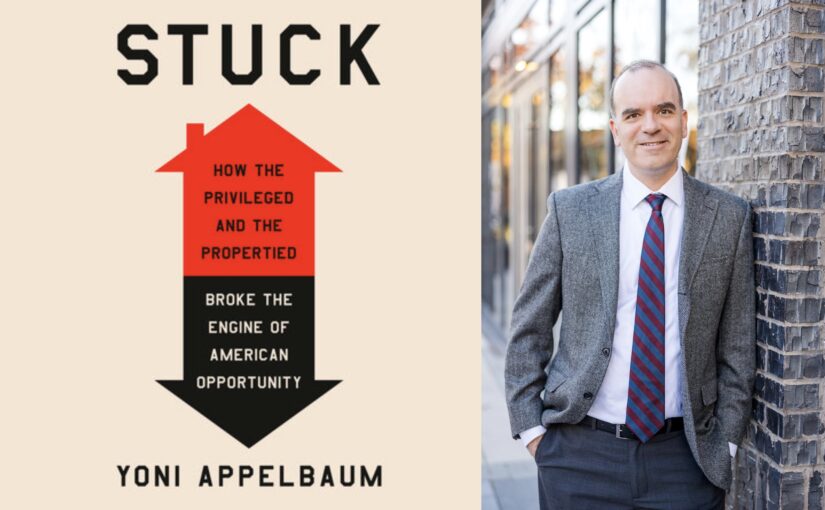
That’s from a new book by historian and Atlantic journalist Yoni Appelbaum called “Stuck: How the Privileged and the Propertied Broke the Engine of American Opportunity.

In healthy economies, including for much of the American golden age, people move to better jobs, cheaper places, growing regions. In the US today, people are increasingly trapped in place. When people can’t move, demand piles up in a small number of “winning” metros. Prices explode there, while other places stagnate or hollow out. I’ve written on the topic this year myself here and here.

Appelbaum’s book recounts the long trends that are piling up today. He recounts how American zoning regulations were introduced for race and class control, not for genuine health or safety concern. Early 20th century leaders, including eventual-US President Herbert Hoover, misunderstood crowded tenements and single-family homes as the obstacle and the accelerant, rather than what they really were: the launching pad and the eventual destination for those who made it out.

That history has persisted to today, where regulation and competing priorities strangle what might naturally occur. As famed mid-century urbanist Jane Jacobs said, over-planning a community is “attempting to substitute art for life”

Below I have notes for my future reference from Greenbaum’s detailed book. It’s wonky, and less colorful than I expected, but for anyone invested in the topic, it’s worth it.

Continue reading The “housing affordability crisis” is really a mobility crisis

Of Boys and Men

A very small number of men dominate the most powerful and wealthiest positions, and are among the most aggressive humans alive.

But though this tiny number accounts for many disparities, and men have not taken enough domestic imbalances, their trend lines are worrying. Boys and men are going the wrong direction fast.

That’s from the 2024 book by Richard V. Reeves: “Of Boys and Men Why the Modern Male Is Struggling, Why It Matters, and What to Do about It.” It’s one of a growing collection of research and literature.

As Reeves writes: “We have an education system favoring girls and a labor market favoring men. Two wrongs don’t make a right.”

Below I share my notes for future reference.

Continue reading Of Boys and Men

The Committee to Protect Journalists reports Israeli forces have killed nearly 200 journalists

Four Al Jazeera journalists — and three others — were killed by an Israeli air strike in Gaza this month. We need to talk about that.

I usually only share reporting I’ve done, or topics where I have real expertise. International politics isn’t my beat, so I don’t pretend to have unique insight there. But this is different.

Continue reading The Committee to Protect Journalists reports Israeli forces have killed nearly 200 journalists

PhillyABCs: my first kids book

After reading a particular regional children’s board book one too many times, I decided my home of Philadelphia deserved better.

I’m a journalist who spends my days obsessed with how places develop identity and share that with people to live, work and thrive. I’m also the father of two young kids in the city’s Fishtown neighborhood. I also happen to have a close friend who is a talented illustrator and a new mother herself (Hi Sara Scholl!).

I wanted to create a simple board book that would keep young kids engaged, amuse grown-ups and actually contribute something to a region’s identity. I was working on the alphabet with my pre-schooler, who responded best to fun environments where she could tie visuals to sounds and letters.

As dead-simple as it is, the ABCs framework had been used for just a couple states and cities around the world, along with some industries and hobbies. I made a list of kids publishers that seemed to produce a similar vibe, did hours of research of contacts and processes at those firms. Then I led outreach.

On Sept. 28, 2025, my first kids book launches, and can be pre-ordered at PhillyABCs.com.

Below I share some other background, lessons and insights for later.

Continue reading PhillyABCs: my first kids book

Pronoun Trouble by John McWhorter

The singular use of “they” is entirely consistent with other linguistic shifts, and even familiar to older periods of English. The term’s partisanship may come more from how quickly and forcefully the change, rather than the change itself.

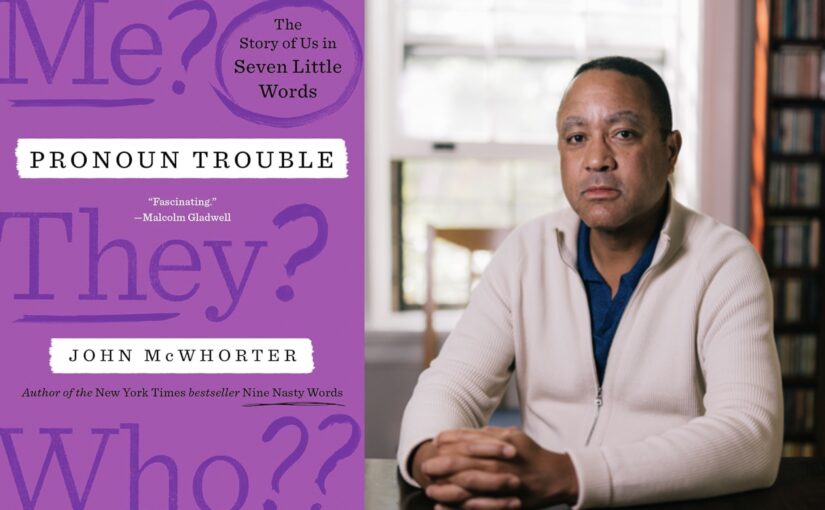
That’s from linguist John McWhorter’s new book Pronoun Trouble: The Story of Us in Seven Little Words.

I’m a fan, and have read most of his other books. This one is consistent with his growing style: Using credible linguistics research to guide us through today’s language changes. It’s a quick and approachable read, I recommend it.

Below I share my notes for future reference.

Continue reading Pronoun Trouble by John McWhorter