Careless People: a Facebook whistleblower’s account

Mark Zuckerberg could reign “like the Queen,” writes Sarah Wynn Williams.

She’s the former Facebook exec turned whistleblower who’s new book Careless People details her time working closely with Zuckerberg, Sheryl Sandberg and other international staff.

“I’m struck by the impermanence of importance,” she writes. “And yet, Mark could conceivably continue to hold his place cheering world leaders for another 50 years. He’ll see these leaders off in the generations of leaders that follow them.”

Other former staff at Facebook, later renamed Meta, were critical of Wynn Williams’s portrayal. But the book is detailed and riveting. It portrays not evil-doers, but, like the characters in the Fitzgerald novel that originates the book’s title, self-interested and vain people who have more power than they’ve earned.

“A different path was possible,” she writes. “We all would be better off.”

Below I have notes for my future reference.

Continue reading Careless People: a Facebook whistleblower’s account

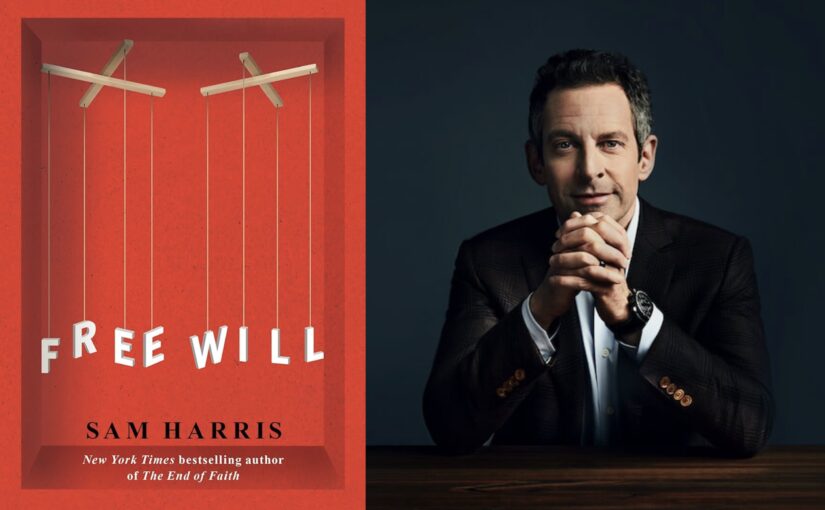
Free will is an illusion: Sam Harris

Free will, as we commonly understand it, is an illusion.

Chemical reactions and and a complex interplay of far-flung factors shape what options come before us, argued neuroscientist-philosopher Sam Harris in his slim, sharp 2012 book Free Will.

“You can do what you decide to do,” he writes. “But you cannot decide what you will decide to do.”

The practical implications inform how to treat criminality, with a sense of sympathy for the unlucky bastards whose lives lead them to bad deeds. Strategic punishment is still possible, though, he argues: If we could incarcerate hurricanes we would, and we give justice to wild animals without calling it free will.

Below are notes for my future reference.

Continue reading Free will is an illusion: Sam Harris

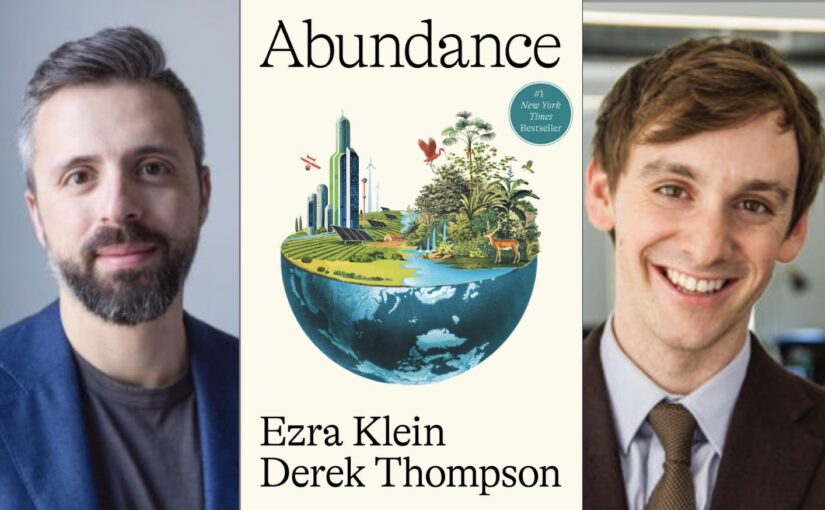
Abundance

Democrats should be able to campaign by saying ‘vote for us, we’ll govern like California.’ Instead Republicans campaign by saying ‘vote for us, or they’ll govern like California.”

The American left lacks a central organizing principle, other than slowing progress with an ever growing checklist of rules: they need an alternative. So argues Abundance, a book by prominent, center-left national journalists Ezra Klein and Derek Thompson. As a perfect representation of the divided era, the book’s commercial success and the author’s rising popularity has created a backlash from many progressives. Classic liberal Klein in particular just seems to irk a whole class of leftists.

As the authors write in the book: “One way of understanding the era we are in is as the messy interregnum between political orders.”

Their “abundance agenda” is polarizing in part because their interest is in operating the current system, and many of their would-be-allies turned critics are not. The identifiers of “liberal,” “progressive,” “leftist” and “socialist” are discussed tirelessly among smart people with graduate degrees and little serious focus on governing. Many of them contribute to the dismaying see-sawing of elected Democrats, that have for generation focused on appeasing a diverse coalition.

The left, the authors write, “seeks legitimacy through rule following rather than through the enactment of the public’s will.“ The United States is a big distributed republic, with thousands of layers of government, at town, county and state levels, to experiment and demonstrate an ability to solve problems. Instead, as the authors argue, rather than solving homelessness in some Democratic city, leaders oversee a multi-year research phase to hire a BIPOC-led consulting firm that confers with a full list of constituent groups from identities, environmental and social causes to gather community feedback.

Nothing is solved, everyone complains. Most vote elsewhere next go-round. This has gotten Klein and Thompson lots of glowing praise from centrists, and ferocious pillorying from progressives. One small contribution I kept thinking about while reading the book: Lots of their perspective would play nicely in local political contexts, rather than vicious national conversations.

Meanwhile, public trust continues to decline, and green infrastructure is slowed. Setting aside the Biden administration’s ambitious IRA green energy bill and the Chips and Science Act focused on industrial policy, Democrats long ago gave up “supply side” policies. Their book argues that should change.

Politics today is a fight over what we have, or had — not what we can create.

Below I share my notes for future reference.

Continue reading Abundance

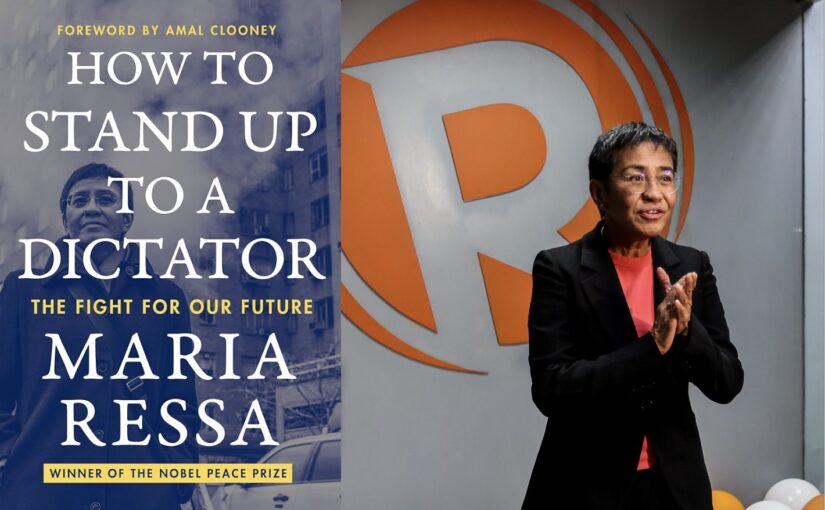
How to Stand Up to a Dictator: Maria Ressa

Bullies only respond to strength. Complicity won’t due. When confronting an authoritarian, best to “hold the line.”

That’s from the 2022 book “How to Stand Up to a Dictator: The Fight for Our Future,” written by Maria Ressa, the Nobel Peace Prize-winning journalist-entrepreneur behind Rappler — a respected, digital-first news site in the Philippines. Ressa was jailed and harrassed for her unwavering coverage of Filipino corruption.

The book is memoir and field guide, with a telling mirror for American audiences: the rise and fall of her enthusiasm for social media, and her battles with elected officials disdainful of free press and democratic norms. She’s charming and energetic. I spoke at a recent journalism funders conference where she was the headliner, and she gushed on-stage, effusing advice and perspective and vision. It’s easy to believe in her, and she tells a story of optimism, provided we work for it.

Of building open discourse-use and democratic values in the Philippines, in 2016, she thought Facebook was the solution; by 2018, she thought of them as indifferent and by 2020, she thought that “Facebook was the bad guy.” For all her reporting and operating a fearless news organization, she was jailed.

Why return to the Philippines to be jailed, even though she has American citizenship and family there? “There is no choice,” she wrote — couldn’t turn on Rappler and her employees and community and it’s where she wants to be. This will remind of Navalny, as she writes: “Over time, you get used to fear”

So, how do you stand up to a dictator: “by embracing values, defined early.. you have to create a team, strengthen your area of influence” — and know your lines and stand firm by them.

Below I have notes for my future reference.

Continue reading How to Stand Up to a Dictator: Maria Ressa

Multi-local news can thrive when it’s about more than just place

(This originally appeared a Linkedin article)

Newspaper veterans keep trying to rebuild newspapers.

The impulse is rarely stated so bluntly. But you hear it in most strategy sessions about “saving local news.” Funding and analysis focus on a town-square-style local news bundle that newspaper veterans are determined to sustain for shared identity.

I actually agree with the civic benefits of a single, professionally-curated website, newsletter and social feed that approximates what’s happening in a place. I benefit from such efforts, even if I don’t share the deep emotional connection that people who loved the best years of local newspapers do.

Yet single-mindedness squeezes out other ideas. This blind spot is illustrated in the way the term “multi-local” is currently being discussed and digested by journalism insiders.

Continue reading Multi-local news can thrive when it’s about more than just place

What Baltimore’s “Black Butterfly“ teaches the rest of us

Why does there remain a plethora of social ills the disproportionally affect Black people in America over 150 years after chattel enslavement has ended? “The answer: black communities have been subjected to unrelenting an ongoing historical trauma.“

That’s from The Black Butterfly: The Harmful Politics of Race and Space in America by Dr. Lawrence T Brown in 2021. He coined the term “black butterfly” to refer to the patterns of racial segregation in Baltimore, which mirrors patterns in other US cities.

Below I share my notes for future reference.

Continue reading What Baltimore’s “Black Butterfly“ teaches the rest of us

Philosophy or Computer Science: Who Has Higher Unemployment?

Who do you think has a higher unemployment rate right now—recent college graduates with a philosophy degree or those with a computer science degree?

Yikes: it’s computer science, per the Federal Reserve Bank. It’s part of a massive change I’ve written about.

Continue reading Philosophy or Computer Science: Who Has Higher Unemployment?

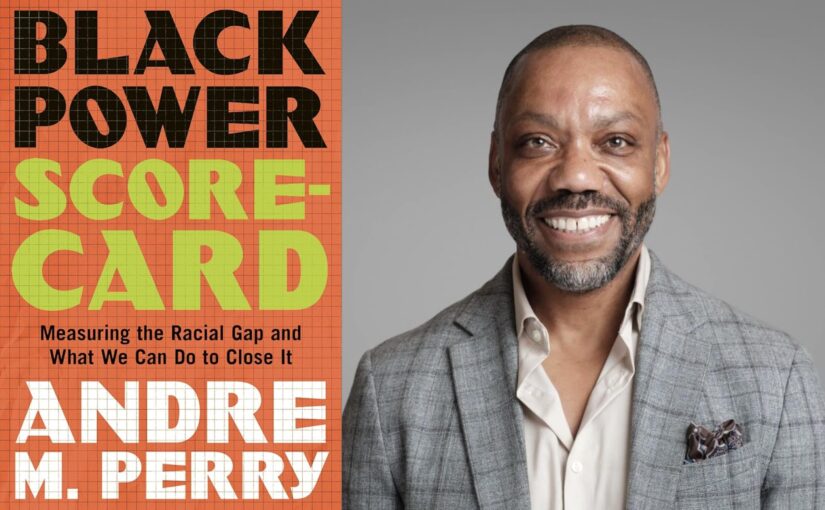
Measuring the Racial Gap and What We Can Do to Close It

To understand the economic, cultural and political progress of Black Americans, it helps to look locally.

Brookings researchers released the Black Progress Index with a dozen factors they say are predictive of Black empowerment. It tells a story of entwined issues in American society.

That’s from Black Power Scorecard: Measuring the Racial Gap and What We Can Do to Close It, the new book from Andre Perry, a fellow of the Brookings Institution.

Below I share my notes for future reference

Continue reading Measuring the Racial Gap and What We Can Do to Close It

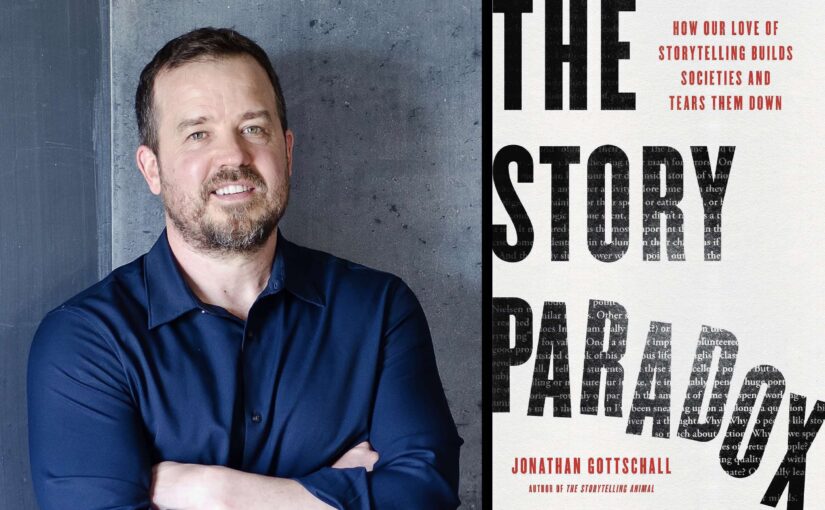
How Our Love of Storytelling Builds Societies and Tears Them Down

If storytelling is so powerful, then why hasn’t the “storytelling big bang” of social media coincided with “a big bang and harmony and empathy”? Well, it has, but that empathy is for in-groups at the expense of the whole.

Social media can feed us any narrative we want: that we are smart, or behind or, above all else, that we are aggrieved by someone. This isn’t because the social platform companies want this specific outcome exactly. Rather, it’s because algorithms feed us what we want to keep us engaged, which reinforces content creators to create more of that subject matter — all of which is what these platforms do want.

In this way, storytelling is “an essential poison” like oxygen, something we need to live but which when isolated or over-concentrated can kill us. In science, that’s called “the oxygen paradox” which inspired the title of a 2021 book called “The Story Paradox: How Our Love of Storytelling Builds Societies and Tears Them Down” by professor Jonathan Gottschall. Ahead of a conference keynote I gave on “the case for storytelling” for place-based marketers, I recently reread his 2012 book Storytelling Animal, which helped me find this one.

“Story is a mercenary that sells itself is eagerly to the bad guys as the good,” Gottschall writes. They are “influence machines” and so stories aren’t moral; they’re moralistic — they can be used for good and for bad.

Continue reading How Our Love of Storytelling Builds Societies and Tears Them Down

Will There Be More Software Developers in the U.S. Next Year? I’m Betting Yes.

Will there be more software developers working in the United States next year?

My friend—provocateur, venture capitalist, and debutante—Brian Brackeen says no. I say yes.

Now, Brian isn’t some fool. He’s an investor who backs tech companies. I’m a journalist who covers them. So we’re making a bet out of it. [Update: Amusingly, others are betting on this now too]

Continue reading Will There Be More Software Developers in the U.S. Next Year? I’m Betting Yes.