Keynote: The case for storytelling (for entrepreneur-led economic development)

Below are my notes, and video, from the keynote address I used to kickoff Technically Builders Conference. It informed this story we published on Technically. My slides are here.

Maria Romero has 90 days to find a job — or she gets deported.

In December, the Mexico City native completed her MBA in marketing analytics at Philadelphia’s Drexel University. She’s young, educated, with in-demand skills. The kind of immigrant Americans across the political spectrum say we want.

And yet: Maria is worried. It’s February 2025 when the Technical.ly newsroom first meets her — 30 days left, tick tock tick tock. Higher interest rates have ended the tech hiring boom. Volatility is everywhere. Her STEM degree and F1 visa gives her years to work like any American citizen — no quirky paperwork, not even modest immigrant sponsorship costs. But she’s nervous anti-immigrant rhetoric is making a tough hiring climate worse for her.  Forget about paying bills, if she doesn’t get a job she’ll get kicked out of a city, out of a country, that she was ready to call home.

She applies to more than 500 jobs. She does coffee meetings, texts friends, has her story told by a news outlet and responds to inbound outreach. She also keeps on living — she walks her dog, she goes to restaurants she loves. 

The thing we do before our life changes forever is almost always mundane.

Continue reading Keynote: The case for storytelling (for entrepreneur-led economic development)
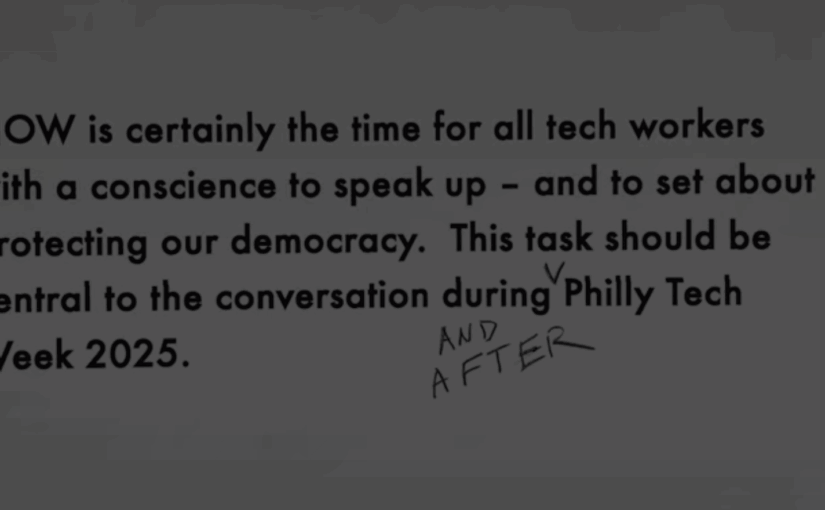
My response to a troll

I have a troll. I’ve had them before, and I’ll have them again. This one though has passed more standard comments and emails, and has shown up in person. He was there a year ago when I got struck in the face at an event by a protestor I had to remove. Now, last month, he wrote up and printed hundreds of flyers with a long missive about me. He and some others posted them up on poles around my work conference, and handed many more to the volunteers at the conference’s registration table.

I do not think about this man, but gosh, he sure does think about me — he appears to be a retiree with a lot of free time. (I’m beginning to assume he kinda has a thing for me). His attacks were fairly strange, but easy enough to dispute that I thought I’d do that here for my own well-being.

Continue reading My response to a troll

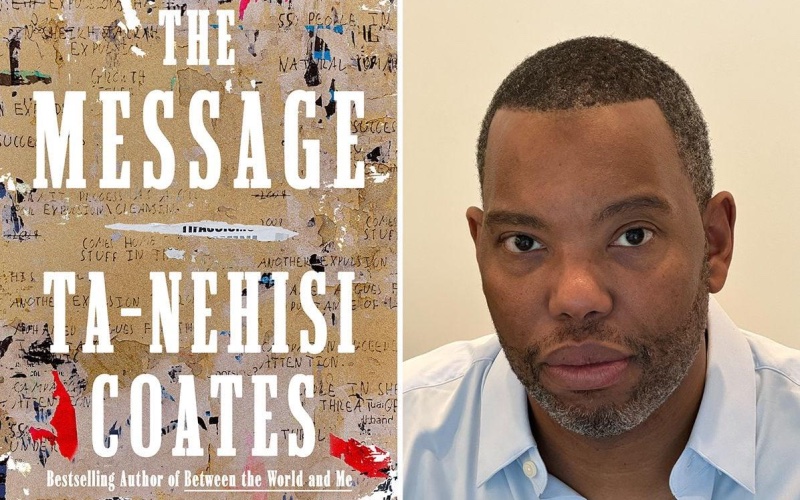
The Message by Ta Nehisi Coates

Every story is imbued with the biographies of those who hear and repeat it. And so each story gets distorted some. We can lose the author’s original intent.

It’s fitting then that I came to assume that Ta-Nehisi Coates’s new collection of essays published in the fall — one year after the Hamas attack on Israel — was exclusively about the Israeli-Palestine conflict. Notably including a CBS Morning interview, what I heard about the book was centered on the conflict.

Instead “The Message” is a curated archive of private reflections and political commentary informed by short trips Coates took to several locations to reflect on race, justice and U.S. foreign policy. Just the final chapter features a few days he spent in Israel and Palestine. The book’s overall message is less about any single conflict and more what he describes as a moral responsibility of the writer to speak plainly in moments of great public consequence.

Below my notes.

Continue reading The Message by Ta Nehisi Coates

The electability of female candidates and other “collective illusions”

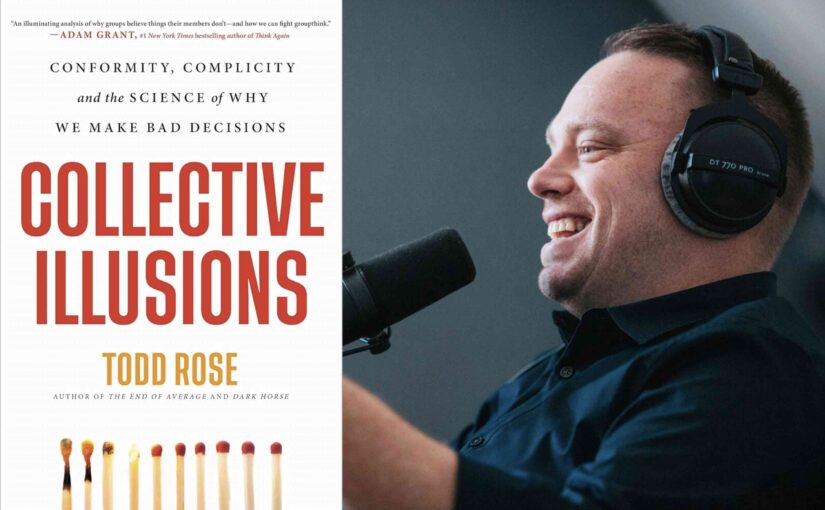
Most Americans report no real difference in how likely they’d be to support a female candidate over a similar male one. The difference is that more Americans think that other Americans would be less likely to support a female candidate. They believe others believe something.

That’s an example of what some researchers call “pluralistic ignorance,” and comes from Collective Illusions: Conformity, Complicity, and the Science of Why We Make Bad Decisions, a February 2022 book by Todd Rose, who leads a nonprofit polling and think tank. As the title implies he calls these examples “collective illusions,” and there are many.

Most Americans still identify as patriot; bad actors really do use bots to amplify otherwise unpopular extremist political views and we really did create a toilet paper shortage during the covid-19 pandemic. As Rose puts it: “When individuals conform to what they think the group wants, they can end up doing what nobody wants.”

This is especially true about bad, or simply incorrect, ideas we hear again and again: “Like a glitch in our biological software, repetition has no logical connection to truth. Yet it has somehow become a trap door to our beliefs.”

Rose’s book is sharp, thoughtful and interesting. I recommend it.

Below I share my notes for future reference.

Continue reading The electability of female candidates and other “collective illusions”

Jimmy Lai, Hong Kong’s troublemaker

What’s the greater priority: universal human rights or sovereign rights? What rights, if any, are truly universal? How far should other nations go to challenge a sovereign power who is taking such rights away from residents within their boundaries?

After the horrors of the world wars, the United Nations marked in 1948 its “Universal Declaration of Human Rights.” This gave moral currency to dozens of international actions over the next 80 years. The drafting committee included philosophers from China and Lebanon, yet these are criticized by some as Eurocentric. Overreach under the UDHR banner complicated its message, and gave authoritarians greater cover.

Where does that leave us? I’ve thought about that since completing “The Troublemaker: How Jimmy Lai Became a Billionaire, Hong Kong’s Greatest Dissident, and China’s Most Feared Critic,” a 2024 biography written by Mark Clifford.

Continue reading Jimmy Lai, Hong Kong’s troublemaker

This is not funny. But it has the makings of a very dark comedy

The details were horrible, a gruesome murder scene. But, stay with me now, I was repeatedly sent screenshots of multiple local TV news segments about the discovery of a body on South Street in Philadelphia this month.

Continue reading This is not funny. But it has the makings of a very dark comedy

Inside the Multiracial Populist Coalition Remaking the GOP

In 2002, The Emerging Democratic Majority book based its arguments on two key points: that the population of the United States was becoming less white, and that non-white voters voted for Democrats more often than Republicans.

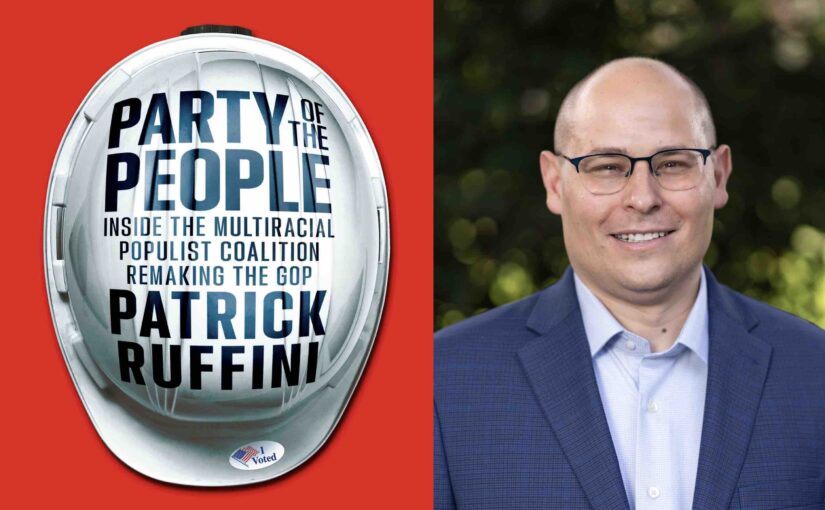
Though the multiracial Obama coalition seemed to make their case. The Trump era has looked very different. In 2023, within the Biden presidency, Republican strategist Patrick Ruffini wrote “Party of the People: Inside the Multiracial Populist Coalition Remaking the GOP,” which looked prescient in November 2024.

Looking closely at the 2016 and 2020 elections, Ruffini argued that Hispanic, Asian and mixed-race voters were following voting patterns of immigrants before them. Very unlike Black American voters, and Native Americans too, with their distinct historical context, waves of immigrants often vote their liberal interest, then grower richer and vote a different interests.

The Emerging Democratic Majority rightly demonstrated how much more diverse the American electorate would get, but badly misunderstood how that more diverse electorate would vote. The 2024 election put this on full display: Democrats look like a party of rich, educated people, alongside Black supervoters; whereas Republicans look now like a multiracial populist coalition. This is so far from the Republican jokes that left-leaning voters told in the 2000s and 2010s. Whatever comes to pass, the book is rich with insight.

Below my notes for future reference.

Continue reading Inside the Multiracial Populist Coalition Remaking the GOP

How to hide an empire

In 1916, the United Kingdom and the United States both formally commemorated new holidays. The British crown introduced Empire Day; For the Americans, it was Flag Day.

That distinction between the reigning world superpower and its quickly rising successor says a lot. Once, empire was a point of pride, a signal of strength and responsibility, but as the United States established itself as the global leader, that changed. In 1940, 1 in 3 people in the world lived in a self-described empire. By 1965, that total was 1 in 50, and falling. Though the United States hasn’t used the term, a growing body of research argues historians should.

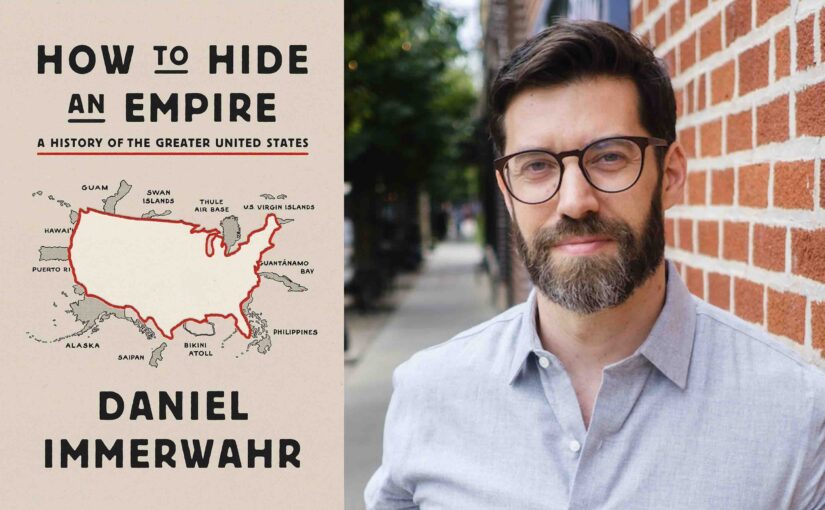
That’s from “How to Hide an Empire: A History of the Greater United States,” a 2019 book written by historian Daniel Immerwahr. It is a kind of global version of the influential “A People’s History of the United States,” Howard Zinn’s classic from 1980 that was updated in 2003 (the version I read as an undergrad).

Immerwahr argues the American empire looks different, based less on large swaths of land and more on strategic ports. This was made easier still as American science introduced a growing number of synthetic replacements for physical goods, such as synthetic fertilizers and rubber replacements (The United States “replaced colonies with chemistry”). Nonetheless, that American flag waved over a growing number of points in the world — with similar problems that are familiar to any previous empire.

American leaders faced a “trilemma,” as Immerwahr puts it. They’ve had to choose between Republicanism, overseas expansion and white supremacy, but can only achieve two. Rather than drop white supremacy, the United States cut the Republicanism, thereby overseeing the Philippines in the past and currently maintaining Puerto Rico, Guam the US Virgin Islands and other inconsistently administered territories without full nationhood. The book is challenging and worth grappling with, regardless of your own take on it all. I recommend it.

Below my notes for future reference.

Continue reading How to hide an empire

Book of The Dead by Richard Dawkins

Science enhances our experience with the world, rather than diminishes it.

For example, by understanding genes, we better understand that all of us are a kind of palimpest, messages layered up ones before us. This is the beginning thrust of Book of The Dead, written by eminent science thinker Richard Dawkins last year.

I didn’t finish this. It didn’t capture me but I respect Dawkins. Below some notes for my future reference.

Continue reading Book of The Dead by Richard Dawkins

Patriot by Alexi Navalny

We must separate “a good people with a bad state.”

The defining representation of this is Alexi Navalny, the Russian lawyer turned good-government advocate that stood, and died, as the world’s most prominent anti-authoritarian activist — and foil to Russian despot Vladimir Putin.

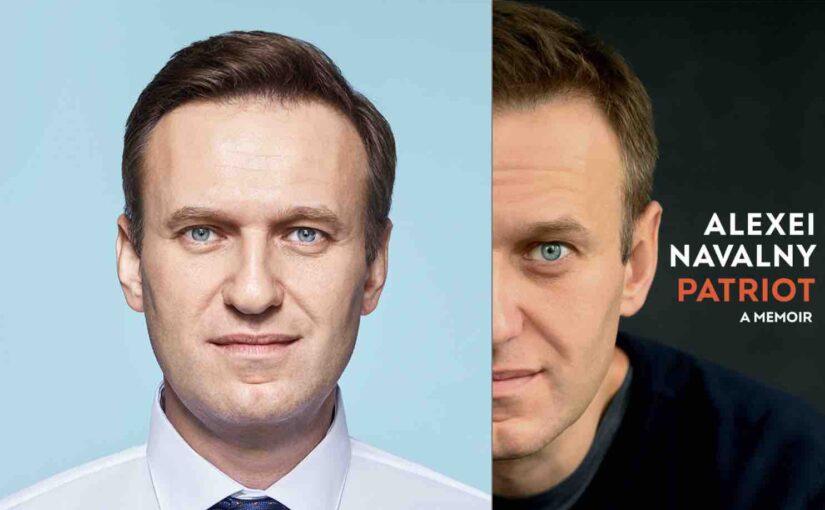
In Patriot, his posthumous memoir that was published last fall, Navalny’s charm and commitment shone through. I admire him greatly. The book is rich with anecdotes about growing up under late-stage Soviet Communism, some of his tactics and his hopeful worldview.

“My family had a deep love of our country and was exceedingly patriotic,” he wrote. “Nobody however had any time for the state, which was regarded as a kind of annoying mistake — one we ourselves had made, but a mistake nevertheless.”

More broadly, as the book cover itself aptly puts it:: “Life works in such a way that social progress and a better future can only be achieved if a certain number of people are willing to pay the price for their right to have their own beliefs. The more of them there are, the less everyone has to pay.”

Below my notes for future reference.

Continue reading Patriot by Alexi Navalny