Nonprofit news models are important. We need others too

With new grantees announced earlier this year, I’m thrilled by the success of nonprofit local newsrooms, well represented by the American Journalism Project, rolling across the country. It seems clear that each U.S. state, and many regions around the country, will, and should, have some version of this model, sustained by local philanthropy and individual donors. This is a necessary, and exciting, layer to the future of local news ecosyinstems — it is also incomplete. As the founder of decade-plus-old, bootstrapped, niche multi-local newsroom, let me share why.

Back in 2009, I used two plastic containers as a couch and supplemented my meager freelance income by doing odd jobs in landscaping and plumbing. It was clear a true global economic crisis was hastening the decline of my trade. I was living in a crumbling, mouse-infested apartment in the Frankford section of Philadelphia. I scared, lonely and very sad.

Two friends I knew from my college newspaper days were also feeling quite stuck, falling through the cracks of a yawning fissure in how our economy worked and information gathering needs were met

From the start, we agreed that every local news organization still structured as an advertising model was on an irreversible path of decline. The web’s power was scale, anything that unnecessarily drew geographic boundaries was unnatural. None of us came from families with any business background but we were curious and frustrated. We felt very abandoned by those who should have been our mentors and advisors. If I’m being honest I still harbor a chip on my shoulder from those days, and likely will for the rest of my career.

Since then, I’ve become fixated on understanding how journalism creates value for communities. I’ve learned that journalism’s value—curating and verifying information to help people understand their world—remains immense. But too often, the ways we attempt to sustain journalism misalign with this value.

Nonprofit models are one such approach. They freeze the core principles of 20th-century accountability journalism and fund it with philanthropy and reader donations. This is a promising trend, and I believe these newsrooms will endure as a key part of the ecosystem. But they aren’t enough.

For one, nonprofit newsrooms must compete with other critical community needs—food banks, job training, and the arts. During times of crisis, it’s unclear whether journalism can consistently win that competition. More importantly, there are simply too many communities for nonprofit models to serve alone.

Instead, we need a broader range of experiments. Journalism shouldn’t limit itself to replicating legacy models under new funding structures. We should explore new business models that align journalism’s value with sustainable revenue. That means embracing entrepreneurship, commercializing ideas, and rethinking how we engage with audiences.

For-profit newsrooms have the potential to play a critical role here. Charging a lot of people a little—or a few people a lot—remains the foundation of any sustainable business. Yet, too often, journalists are uncomfortable or even dismissive of revenue generation. That mindset is dangerous if we want journalism to endure.

I don’t mean to suggest that my own company, Technical.ly, has cracked the code. If anything, my experience has taught me there is no “code.” There are only the slow, messy steps of experimentation. But I remain convinced that local news needs more than one model to survive.
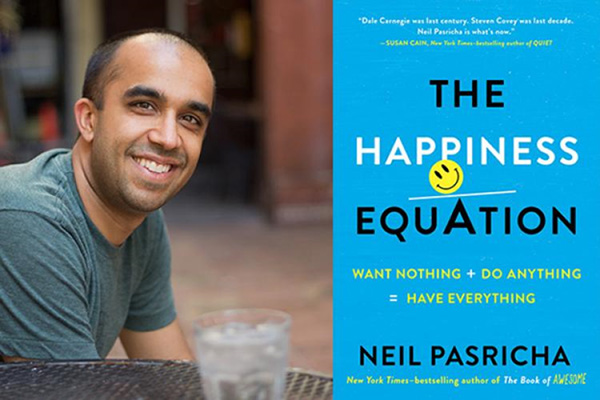
The Happiness Equation

Develop your internal motivation. Focus. Be kind. Ignore the rest.

I read Neil Pasricha’s 2016 book The Happiness Equation as part of a pandemic-fatigue powered period of self-discovery. It certainly has its gimmicks and many of the concepts felt familiar to me. Still, I did appreciate the book and came away refocused on returning to being a happier person during such a tumultuous time.

Below I share a few of my notes from reading the book, though I recommend you buy a copy yourself.

Continue reading The Happiness Equation

What if journalism wasn’t only produced by news organizations?

Opera is a tightly defined form of musical theater, but it doesn’t encompass all celebrated music. Journalism risks a similar narrowing of scope—a class divide that leaves it lacking the range and diversity its principles deserve.

As a community of practitioners, we often misunderstand journalism as the exclusive product of a single industry: news organizations. Journalism is not just a product; it’s a set of principles and approaches developed over centuries to foster trust and build relationships.

In the 20th century, journalism’s societal value—fact-based, contextual information to help communities navigate a complex world—was primarily produced by news organizations. This dominance stemmed from a successful business model that paired advertising revenue with independent newsrooms. That model, however, has collapsed under systemic creative destruction. Instead of rethinking how to produce the outputs (journalism) more effectively, we remain overly focused on restructuring the inputs (news organizations).

Meanwhile, other actors—some unaware of or uninterested in journalistic norms—have invaded the space. They mimic the appearance of journalism but produce outcomes ranging from banal content marketing to partisan propaganda, further eroding trust in traditional news organizations.

As someone who co-founded a digital-first local news organization after the Great Recession, I’ve spent the last decade operating in this shifting landscape. In 2011 I wrote: “Sustaining the craft of journalism matters more right now than the craft itself.”

Our work looks little like the 20th-century newspaper model that dominated local journalism, which leaves us seen as anomalies rather than as viable examples of what’s possible. Through this experience, I’ve become convinced that journalism practitioners are still thinking too small. We need to codify the tenets of journalism into a worldview that any professional or organization can adopt—making journalism less of an exclusive craft and more like a cloud-based SaaS tool: adaptable, scalable, and widely accessible.

Local journalism, in particular, suffers under two unsustainable extremes: large-scale media brands thriving through web-enabled reach, and small, local brands struggling with audiences that appear minuscule in comparison. Nonprofit newsroom models have emerged as a promising response, preserving the core principles of 20th-century accountability journalism while leveraging philanthropy and reader support. These models are important and long-lasting—but also limited.

Nonprofit journalism cannot meet the needs of every community. Competing against other vital services like food banks and job training, especially in times of crisis, is an uphill battle. Moreover, the editorial firewall of the 20th century has left many journalists deeply uncomfortable with—or even hostile to—revenue generation. That mindset is dangerous if we want this work to last.

What we need is a broader exploration of commercial opportunities and new ways to align journalism’s value with sustainable business models. My own company, Technical.ly, hasn’t cracked the code—because there is no code. But we’ve worked through the painful, slow steps of building something sustainable, and I believe those lessons are replicable.

I’m motivated by the conviction that every community needs a voice. Journalism doesn’t belong to news organizations alone—it belongs to anyone committed to creating and sharing fact-based, contextual information. If we embrace that, we can ensure journalism thrives, not just as a profession, but as a societal good.

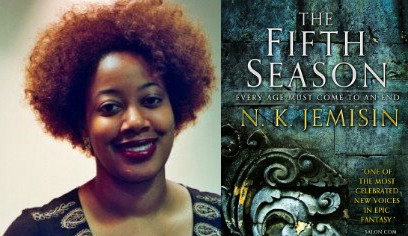
“The Fifth Season” by NK Jemisin

I finally read the acclaimed 2015 science fiction book The Fifth Season, which kicks off the Broken Earth trilogy by NK Jemisin. It was beautiful and enthralling. Lots challenged our relationship to our world and those who are different, and many lines were memorable but two stuck with me as representing those two points:

“Neither myths nor mysteries can hold a candle to the most infinitesimal spark of hope.”

As a character thinks while on a long, desperate march: “There are boring parts, like…when the fields give away to stretches of dim forest so quiet and close that Damaya hardly dares speak for fear of angering the trees.”

What a treasure.

Here’s a list of Pennsylvania whiskey distilleries (and a few stories too)

Pennsylvania was once the country’s largest producer of whiskey, and rye whiskey was its showcase.

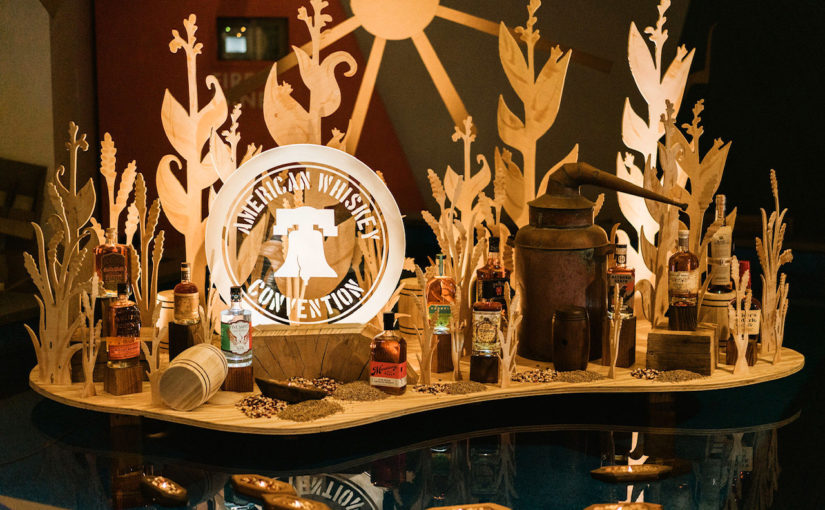
I wrote about this history and the Pennsylvania rye renaissance for NPR affiliate WHYY and its Billy Penn news site. I am personally fascinated by this trend and its history. A couple years back, ahead of the American Whiskey Convention, I found an angle that made sense to be published on Generocity.org, the nonprofit industry news site my company publishes. This year as the convention returned, I felt like I’d be stretching our editorial focus to force another story. Instead I asked friend and Billy Penn editor Danya Henninger if she was interested. Thanks much to Danya for a thorough edit on what I delivered her. Turns out I’m a far more experienced business and economics reporter than I am culture.

I have written here about my relationship to alcohol, and specifically how I’ve come to most enjoy whiskey. Heck, I even have opinions about what cups should be used for what liquid. But this was something else: a chance to begin putting to work the years of my tracking an industry in change.

Do read the story. Here I thought I’d share a few stories I’ve had squirreled away and maintain a list of Pennsylvania whiskey distilleries (because I suspect this will keep growing and I don’t want to annoy Danya anymore with updates). Find both below.

Continue reading Here’s a list of Pennsylvania whiskey distilleries (and a few stories too)

Ludwig Wittgenstein

Words and sentences don’t make much sense when they aren’t entangled with each other. They all can carry wildly different meanings depending on the context and the speaker’s intent. This is a “language game.”

This is one of the many contributions that garnered intellectual celebrity for Ludwig Wittgenstein (1889-1951), an Austrian logician and philosopher. He is a philosophy student’s favorite philosopher, but A. C. Grayling argued in his 2001 aptly named “Wittgenstein : a very short introduction” that his academic celebrity may be unwarranted.

Grayling says Wittgenstein is primarily adored by “aphorism hunters.” I read Grayling’s short book because I wanted to ease my way into Wittgenstein as part of a philosophical exploration I had earlier this year. Pandemic, am I right?

The book was a helpful text, and I still appreciated playing with Wittgenstein’s evolution, from his iconic 1921 Tractatus and his Philosophical Investigations, which was published posthumously and seemed to contradict many of his arguments from his first book.

Find my notes below

Continue reading Ludwig Wittgenstein

Homo Deus: notes on Yuval Noah Harrari 2017 book

Advancements in artificial intelligence could bring about a world in which humans are secondary to self-learning algorithms.

That’s one of the big themes in the 2017 book Homo Deus, a followup by historian and popular intellectual Yuval Noah Harrari on his 2014 book Sapiens. Even more than his first, Homo Deus has been criticized for its wide-sweeping generalizations and his science generalizations. Harrari is one of the chief architects of a kind of techno-pessism so I still find his approach helpful to follow.

He’s a great storyteller, and beyond any debunked science, he engages with concepts I found interesting. I’m sharing notes here for myself. The book is worth reading if only to grasp a view on the treacherous waters some fear are coming due to technical advancements.

Continue reading Homo Deus: notes on Yuval Noah Harrari 2017 book

My environmental impact

Climate catastrophe is sound science.

More slowly than I’d like to admit, I’ve changed behaviors in recent years. A resolution of mine for this year has been to do more. I wanted to capture a small accounting of what I’ve done so far and how I think I can do more.

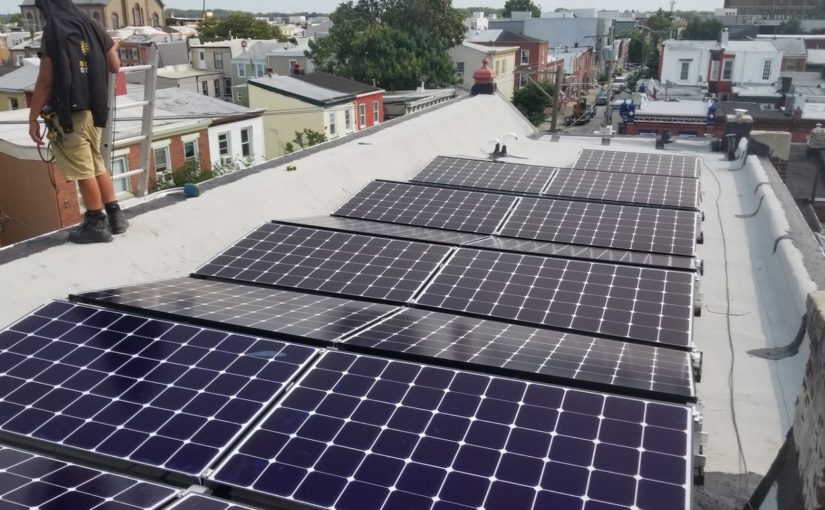
Most prominently, last fall, we installed a 12-panel solar array on our roof. According to projections from our installer Solar States, this should more than account for our electricity usage.

Because of that installation, we replaced our traditional natural-gas hot water heater with a heat pump variety from A.O. Smith. We intend to turnover our other appliances (stove, clothes dryer and furnace) too, as part of electrification. Despite being a home from the 1890s, transitioning all of our home to electricity which can be primarily served by our solar installation will be an important contribution. I’ve happily encouraged a couple friends to follow this same transition.

Continue reading My environmental impact

Notes from the 2016 book ‘The Rise and Fall of American Growth’ by Robert Gordon

The “special century” between 1870 and 1970 was not an economic transformation to repeat. It was an anomalous period of exceptional change super-powered by the remarkable inventions of the Second Industrial Revolution not to be repeated.

So argues Robert Gordon in his influential, academic and deeply researched 2016 book The Rise and Fall of American Growth. It is one of the better respected contributions to the conversation how quickly will quality of life continue to advance. Technological advances tend to not reverse, so his point is not that we’ll regress but that we’re due for a long period of languishing growth and advancement.

For millennia until the 1750s, there was very modest rates of economic growth. Then the First Industrial Revolution ushered in slightly faster growth, which setup the second, which we most commonly call the Industrial Revolution of the mid-19th century. That spurred the fastest advancement in quality of life in human history. By the 1970s, progress slowed. The third, technological revolution only resulted in a short-lived return to high grow in the decade 1994-2004. That was the lone answer to economist Robert Solow’s famous 1984 quip: “You can see the computer age everywhere but in the productivity statistics.”

In his book, Gordon argues we’re unlikely to repeat the rate of gains of that special century. It’s an interesting addition to the familiar techno-optimist versus techno-pessimist argument. Below I share some of notes from the book. It is dense and thorough, so it’s hardly light reading, but I devoured it. It’s an important addition to the economic literature. I recommend reading it.

Continue reading Notes from the 2016 book ‘The Rise and Fall of American Growth’ by Robert Gordon

Personal finance is a social justice issue

The so-called K-shaped recovery to the pandemic economy is expected to widen inequality. It was already well-known that it is expensive to be poor. Yet we sometimes think of personal finance as the hobby of the already rich — of a white male dalliance.

Since the Great Recession and the lost generation of Millennials, there has been renewed interest in accessible financial advice. Yet even as white Millennials are finally making financial gains, it seems Black Millennials are still falling behind. For years at my company, I’ve tried to strike a balance between being positively encouraging to my team to increase their retirement savings (and to speak to the financial planner we make available to staff) without becoming too overbearing. We’ve made gains but I find the topic daunting.

Perhaps because the pandemic cancelled my annual Personal Finance Day with friends, I’ve been thinking a lot about a passion of mine: Personal finance is a social justice issue.

This is important because so many savings and investment fundamentals are simply not intuitive. Get rich schemes continue to fool many. In contrast, slowly and patiently putting a little bit aside into a passive index fund has been a remarkably reliable method for building wealth. Even God couldn’t beat dollar cost averaging.

Talk openly with your friends about what you earn, what you save and how you develop on your own journey. The internet is full of bad advice, but it’s also home to so much good stuff too. How to decide what is what? A solid rule: look toward the longterm and be committed by building habits.

(Photo of the calculator app by Kelly Sikkema via Unsplash)