Imagine a kind of Community Criticism Readiness Index

Imagine a Community Criticism Readiness Index, a tool to assess whether residents have someone to turn to in times of uncertainty. When faced with questions of identity, impropriety, or anonymity, who would they contact, and how would they share information?

In the 20th century, news organizations were often that go-to ally. What I call “journalism thinking,” shaped by those institutions, proved particularly effective in bridging the gaps where laws, frameworks, or formal institutions fell short. Law enforcement, advocacy groups, government agencies, and attorneys all play critical roles in society—but humans didn’t evolve within legal systems. We evolved within stories.

Journalists, then, have long been storytellers in the service of justice. While their work famously uncovers high crimes, far more often they help communities make sense of their everyday lives. Journalists operate not as enforcers of the law but as mirrors and mediators. Their power comes from an audience relationship built on trust, consistency, and curation.

To construct a Community Criticism Readiness Index, we might survey hundreds of individuals across diverse circumstances:

  • What would you do if you observed something you perceived as immoral but not illegal?
  • Who would you tell if a neighbor uncovered a brilliant solution to a persistent problem?
  • How would you respond to evidence of regulatory capture?

The index would consider input from at-risk populations and privileged groups, spanning communities both traditional and web-based. These subcommunities—rapidly forming thanks to digital organizing tools—need critical eyes as much as any long-standing institution.

What I’ve observed from informal studies is that many communities no longer have the trusted outlet that once played this role: the local newsroom. While national journalism and advocacy at the highest levels have rallied to respond to crises in recent years, the decline of local journalism remains an unresolved and growing threat to civic society. It’s a problem akin to climate change: pervasive, systemic and requiring broad collaboration to address.

Over the past decade, more people have joined the effort to rebuild local journalism, but there is still so much work to be done. And like climate change, market factors will play an essential role in the solutions we find.

This is an essay about the future of local journalism and the approaches we’ll need to sustain it in the decade ahead. If we’re to protect our communities’ ability to criticize, reflect, and rebuild, we need tools like this index—and the local newsrooms that make those tools meaningful.


I bought my daughter an NFT

Constrained ownership of digital assets could mean thrilling possibilities.

The chaotic pandemic contributed to a frenzied focus on a new stage for non-fungible tokens. I was introduced to the concept a few years back and followed with interest the explosion of attention more recently. I wanted to purchase an NFT to become more familiar with the process, to support an artist and, most importantly, to give my young daughter a small slice of this strange moment in time.

The process is still quite clunky, expensive and fairly confusing — with multiple related systems. It helped that I also recently went through a similar process to chip into a DAO.

Continue reading I bought my daughter an NFT

A Brief History of Time: Stephen Hawking’s 1988 classic theoretical physics book

A single “theory of everything” exists. We just haven’t found it yet.

That’s one of the main arguments from theoretical physicist Stephen Hawking (1942-2018), as articulated in his 1988 bestselling book A Brief History of Time. The book helped make him one of his generation’s best known intellectuals, and he used an array of impressive technologies to help him continue to shape public thought during his long battle with ALS. It helped popularize many obscure and complex ideas.

Though he didn’t win a Nobel Prize in his lifetime and he occupied a kind of celebrity status, he did contribute meaningfully to his field. In 1974, in his early 30s, Hawking argued that black holes would emit heat energy, so-called Hawking radiation, which would mean that, unless they otherwise added mass, a black hole could eventually vanish. He helped us discover that black holes might not even be, you know, black. That work gave him needed pedigree to write this book, which is a relatively breezy read while also citing much of the most exciting ideas in theoretical physics and even cosmology.

As a hobbyist consumer of pop science, I’ve long wanted to read this text. Much of what he wrote about has been covered by an array of science Youtubers and writers I follow. Yet I still got much from the book. Do read it. Below I share my notes from the book for myself.

Continue reading A Brief History of Time: Stephen Hawking’s 1988 classic theoretical physics book

Yeah, I chipped into a decentralized effort to buy a copy of the U.S. Constitution

The fractional ownership that has been advanced by blockchain technology is an exciting future — even if its popularity borders on the inane. Comparisons to early commercial applications of the internet seem apt. It’s difficult to decipher what will last and what will fade.

Continue reading Yeah, I chipped into a decentralized effort to buy a copy of the U.S. Constitution

How to make a great checklist

No matter how expert you are, a simple, carefully-constructed list will improve the quality of your output.

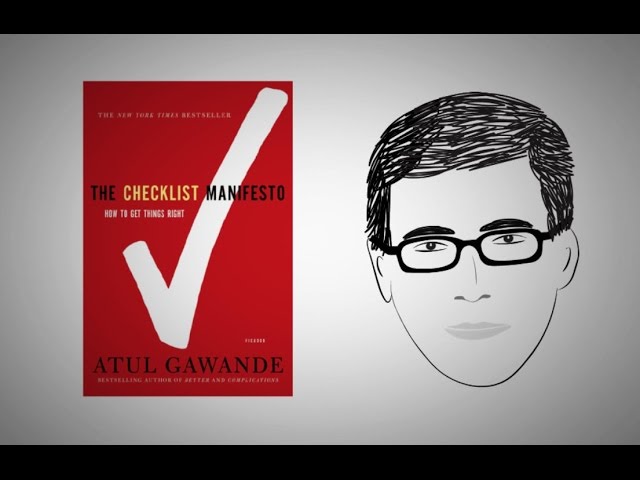
That’s the central point that author Atul Gawande made back in 2009 in his popular business book The Checklist Manifesto, which followed an article he wrote for the New Yorker. It’s a short book that others have recommended to me before, so I finally grabbed a copy and breezed through it. His central point is clear enough that it likely could have remained a longform article, but the book is easy enough a read that’s worth the time. If you haven’t already give it a try.

Below find my notes from the book, including tips for making a better checklist yourself.

Continue reading How to make a great checklist

Spaces between words weren’t common until the 7th century

From the Economist:

A book seems such a simple structure that it feels less invented than self-evident, the innovations behind it hard to see. Yet every chapter in its progress was slow, bound on either side by centuries of sluggishness. Turnable pages didn’t really arrive until the first century bc; the book form didn’t take off properly until the fourth century ad. The separating of words with spaces didn’t get going until the seventh—verylateforsomethingsouseful. Finally things accelerated: first came the index, in the 13th century, then Gutenberg, then, in 1470, the first printed page number. You can still see it in a book in the Bodleian Library.

Works Rules! Google research and data on running more effective companies from the 2015 book

Given its large scale, data-driven culture and willingness to experiment, Google has produced a considerable amount of intelligence on operating effective organizations.

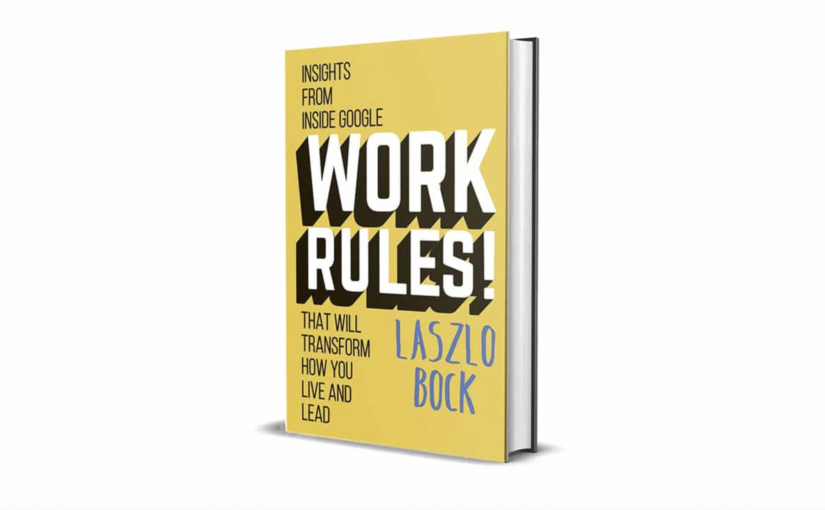
Much of it was shared in the 2015 bestselling book Work Rules! by Google’s former chief people officer Laszlo Bock. It’s long been on my list, and earlier this year I finally finished it up.

I recommend you get yourself a copy of the book. Below for my own future reference, I share notes from my reading.

Continue reading Works Rules! Google research and data on running more effective companies from the 2015 book

Some whiskey stories

I reviewed a turkey-flavor whiskey, and prominent radio show Preston & Steve referenced my review — by literally reading my words without exactly referencing them 🙂

I also wrote about Pennsylvania’s rising rye whiskey.

I did a weekly whiskey review clip with my friend April.

How to be happy

A version of this essay was published as part of my monthly newsletter several weeks back. Find other archives and join here to get updates like this first.

I spent a lot of time living in Tokyo 15 years ago on my bicycle, riding to this park or that garden with one or another book on Eastern philosophy or Asian history. Two concepts I learned about happiness have endured.

One is from a famous passage attributed to ancient Chinese philosopher Lao Tzu. He’s translated as writing: “Be content with what you have; rejoice in the way things are. When you realize there is nothing lacking, the whole world belongs to you.”

Continue reading How to be happy

Is that a Fish in Your Ear? notes on the 2011 book by David Bellos on translation

Translation isn’t about specific word choice. It’s about meaning.

But, then, there are many different kinds of translation. The very old act of translation both creates and defends language in an interconnected world. Earlier this summer, I finished a 2011 book by translator David Bellos called “Is that a Fish in Your Ear: Translation and the Meaning of Everything.” [PDF] Find a review here of it. This is a different approach to understanding language, which has been an interest of mine for years.

You should read the book. For my own purposes, I’ve captured my notes below.

Continue reading Is that a Fish in Your Ear? notes on the 2011 book by David Bellos on translation