Before the covid-19 outbreak, public health officials around the world largely agreed that containment of a flu pandemic is largely futile so better to focus on the most at risk populations: speak honestly, encourage healthy behaviors and work fast on a vaccine.
It didn’t all go to plan. In the United States, the Trump administration successfully oversaw a historic vaccine development, while injecting hostile politics into the system. Meanwhile, left-leaning states over-relied on non-pharmaceutical interventions (NPIs), such as widespread masking and extended school closures, that had limited gains for considerable cost. Right-leaning states contributed to vaccine skepticism, which led to hundreds of thousands of excess deaths.
The new book In Covid’s Wake: How Our Politics Failed Us, written by Princeton University political scientists Stephen Macedo and Frances Lee, attempts to put forward an unimpassioned assessment of the American-led public health response. I simplified their assessment of a handful of the most prominent public health measures into the chart below, and in a social video here.
Viewing the world as a binary between rich and poor is too simple to be helpful.
A century of economic development has created a far bigger middle, so better to simplify with a four-level (quartile) income split. Despite this success, most people when surveyed assume the world is getting worse. It’s important to understand in what ways progress is being made.
My career-long reporting on entrepreneurship has always colored my belief that most people on most days want to make their lives a little better, and so that creates a better place over time. But this book is a canonical example of arguing too many of us overlook remarkable progress we must understand.
The book’s authors, Swedish husband-wife team Ola Rosling and Anna Rosling Rönnlund, and Ola’s father Hans, are insistent that theirs is not a naive or overly optimistic view, though this sort of “globalization has made the world richer and healthier” writing has become deeply unfashionable. Progressive advocates and activists I know deride a class of often-Boomer liberal writer as apologists for an entrenched world order by throwing facts and figures at people.
Still Rosling and team argued they were never apologizing for elites who could rest-easy, but rather doing research to put into context what had worked, so as to motivate the best behaviors to be continued. After Hans’s passing, the husband-wife duo continue leading a research nonprofit called Gapminder. It didn’t help that Rosling gave prominent talks at the World Economic Forum in Davos and at TED, often seen as the heart of this global liberal order.
So though I’m familiar with the arguments and Rosling’s reputation, I wanted to read what he described as the best distillation of his research.
Books like this (and one that came out the same year by Steven Pinker) tend to have two flaws: They overlook how many people are only focused on their personal life not broad global trends, and even many academics consider what these authors describe as an exceptional century, not an enduring trend. For example does slowing productivity and an aging secular business cycle, helped by geopolitical uncertainty and AI technology, portend a reversal of standards for most of us? Economic mobility and wealth equality reached notable highs during the author’s life, but declined since: so is he describing a world that is already changing again?
As they wrote: “Things can be both bad and better.”
The company that set off the arms race is OpenAI, and its cofounder and public face Sam Altman. Altman wielded this argument widely: If OpenAI doesn’t race toward the possibility of superintelligence than an existing incumbent like Google will, or China will. But no one else, nowhere else, could have done this. At least not now.
One Chinese researcher told Hao that no one would have been funded outside Silicon Valley with over $1 billion without a clear purpose, so we created the risk and the solution. As she writes: “everything OpenAI did was the opposite of inevitable.”
Altman shares a birthday with the legendary physicist Robert Oppenheimer (“father of the atomic bomb”). Altman loves the comparison of OpenAI to the Manhattan project, though Hao notes that “he never seemed to add that Oppenheimer spent the second half of his life plagued by regret and campaigning against the spread of his own creation.”
At an industry event in December 2024, Altman’s cofounder and one-time chief scientist Ilya Sutskever said that “we have but one internet,” in referring to the source material that the AI industry has already primarily digested. Having consumed all of us, they seek more, Hao argues, in preferring the “empire” metaphor of the AI industry. The book is exhaustive and critical. A very worthwhile read for those following the industry, even though it goes into even greater detail on internal politics than I needed. It reads as authoritative.
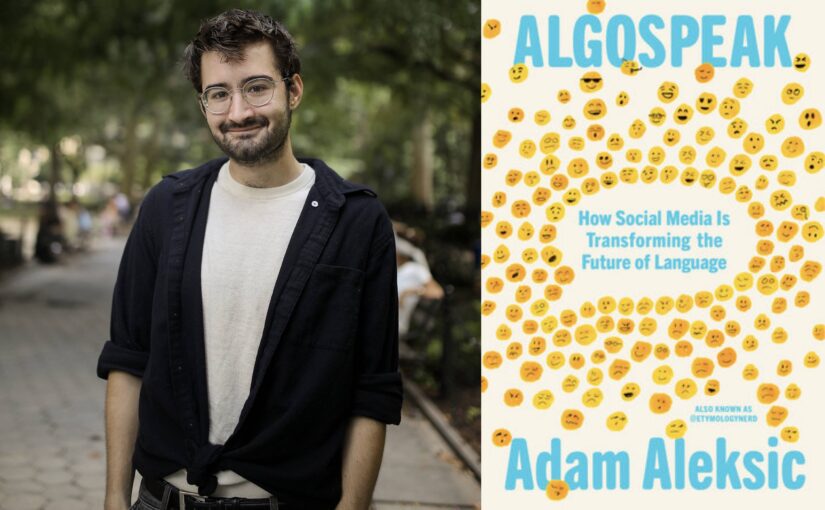
Are algorithms creating a new kind of language development, or just speeding the method we’ve always had?
“Words aren’t just diffusing from human to human anymore: they’re now moving from human to algorithm and back to human.” That’s from Algospeak: How Social Media Is Transforming the Future of Language, the new, charming and insightful linguistics book by Adam Aleksic, a Harvard-trained, 20-something influencer creating under the ‘etymology nerd’ handle.
As he writes: “Algorithms are the culprits, influencers are the accomplices, language is the weapon and you, dear reader are the victim”
The American-led political order that started in 1945 at the conclusion of the Second World War is 80 years old and due for a major reordering.
That’s from How Countries Go Broke, the most recent in the “Principles” series by Ray Dalio, the billionaire hedge fund manager who has written a collection of books on economic systems and investment strategy. I read “The Changing World Order” a few years back.
This, like others in the series, is backed what Dalio vaguely refers to a research team he employs. This makes sense, that a billionaire investor would employ research to develop an ever more detailed view of the world, but he’s become best known for a more expansive view than current economic conditions. Beyond his Bridgewater hedge fund, Dalio pumps out content now that attempts to put today into a broader historical context. No doubt simplified, his “big cycle” is the idea that eternally human qualities result in governments following predictable patterns, of relying on a hard, fixed currency before devaluing it long enough until there is a collapse.
He argues we’re something like 90%-95% through this pattern. Dalio has a reputation of prescience, if not precision: His prediction of a coming internet bubble bursting came five years too early (a half decade of earnings). I struggle with this. The books and research are compelling and interesting, but exactly because they’re comfortingly simple, they also read is unhelpful in any specific or actionable way. The interpretation is nonetheless welcome.
Katalin Karikó’s neurosurgery department chair kept asking her about hitting his preferred metric of “dollars per net square footage,” in terms of funding her lab time with grants, or even prestigious publication. It’s amusingly anodyne and corporate when recounted by a now eminent scientist, who had just told her boss about beginning to collaborate with a cross-disciplinary immunologist Drew Weissman, with whom she would later share the Nobel Prize.
That’s from Breaking Through: My Life in Science, the October 2024 autobiography by biochemist Katalin Karikó, who shared the 2023 Nobel Prize in medicine for her work on mRNA which contributed to the rapid deployment of the covid-19 vaccine. I admire her greatly.
In an over-simplification, cell and gene therapies directly influence DNA, whereas her research focused on using mRNA to send a temporary message to cells. mRNA is considered more unstable and difficult to work on, so it had long been dismissed as not an effective means of treatment. She’s become a canonical example of a delayed payoff for hyper-fixation on a particular problem (almost 20 years with limited academic or industry recognition).
The autobiography is an enjoyable read, starting with her being raised in Soviet Hungary. She criticizes the surveillance system, but remembers fondly its elevation of science and spotting kids with promise from households with less education. She remembers that her school transcripts always had an “F”, for “fizkai” to clarify her parents had worked “physical” jobs and were low educated, which got her extra attention from educators in communist Hungary.
She says half of her elite biology college cohort came from this working class tradition: can any elite American institution claim this?
Public stock markets are exchanges to buy and sell shares in big companies. Most days most people involved are trying to solve some problem. Share prices go up when there is more demand, reflecting market conditions, innovations and/or a story about the future, and they go down when there is less demand.
Shorter-term business cycles (a few years) rotate longer-term secular trends (decades). Investors try to make money by putting this all together into a theory about the world. Different eras call for different strategies. For example, more than three-quarters of the gains in the American stock market between 1982 and 2000 were from rising price-to-earnings multiples (how much more expensive stocks got), rather than rising corporate profit (how much more efficient companies got). Over those 20 years, one could have called stocks “too expensive” and been wrong, until the very end, when a correction brought a big reset. “Fair value” is just just a mark in a continuum on the path from the start to the end of a bull market. Gotta pick your bets.
That’s from How Not to Invest, a book out this year from the investor Barry Ritholtz, who is a frequent writer and speaker.
The reason his book as a negative title? His big idea? A tiny sliver of any competitive field, including wealth accumulation, play the “winner’s game,” in which they’re competing on expertise. The rest of us play the “loser’s game,” as an analyst called it, in which we just try to avoid unforced errors. It’s true in tennis, and in money management. Just be smart, cautious and consistent and you’ll outperform most of the rest.
The book’s foreward was written by Morgan Housel, another wealth manager who is active online and whose Psychology of Money was a bestseller in this tradition of the approachable personal finance books. Ritholtz’s book is longer and more tactical, but continues the tradition of introducing broader strategy and worldview.
He brings up lots of familiar, but effective, truths from psychology and other social sciences.
For one, he brings up the evolutionary mismatch hypothesis, which suggests that traits beneficial in our ancestral past, like craving sugar or storing fat, become detrimental in the rapid, modern world, leading to modern diseases like diabetes, obesity, and inflammation, because our ancient biology hasn’t caught up to today’s vastly different environments (e.g., sedentary lifestyles, abundant processed foods, constant stress). It’s also why basic personal finance strategies are so hard, even if the research has been so dependably clear for decades: put little bits into a diversified portfolio with the lowest fees possible.
Then again, when it goes wrong, as investor Howard Marks wrote: “Experience is what you got when you didn’t get what you wanted.”
Below I share my notes from the book for future reference.
The Gulf War was a seemingly decisive military action led by the United States against Iraq in 1991.
Over a series of essays, French philosopher Jean Baudrillard argued the war was an expression of his concept of “hyperreality,” in which emerging visual media could be used to create something false that appears even realer than reality itself.
By 1995, he assembled these essays into a final, short book called The Gulf War Did Not Take Place.
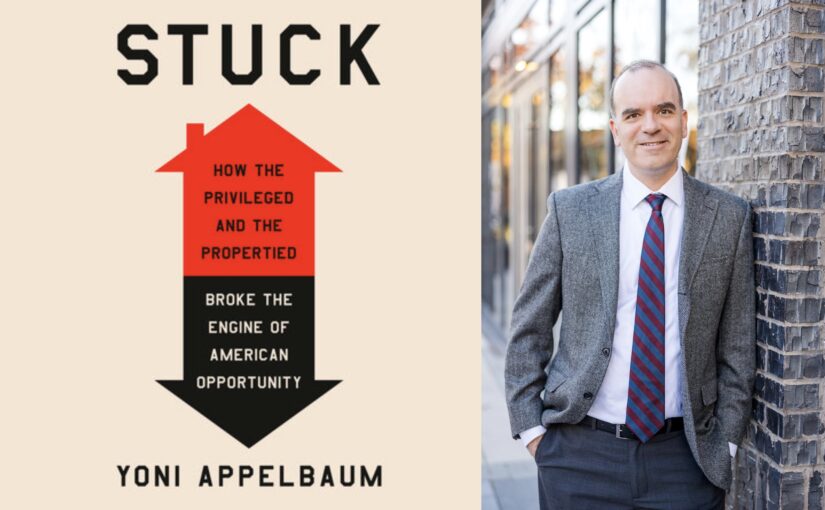
What Americans call a “housing affordability crisis” is really a mobility crisis — economic, geographic and social. Housing is where that immobility becomes most visible, and so expensive housing is more a symptom than the disease.
In healthy economies, including for much of the American golden age, people move to better jobs, cheaper places, growing regions. In the US today, people are increasingly trapped in place. When people can’t move, demand piles up in a small number of “winning” metros. Prices explode there, while other places stagnate or hollow out. I’ve written on the topic this year myself here and here.
Appelbaum’s book recounts the long trends that are piling up today. He recounts how American zoning regulations were introduced for race and class control, not for genuine health or safety concern. Early 20th century leaders, including eventual-US President Herbert Hoover, misunderstood crowded tenements and single-family homes as the obstacle and the accelerant, rather than what they really were: the launching pad and the eventual destination for those who made it out.
That history has persisted to today, where regulation and competing priorities strangle what might naturally occur. As famed mid-century urbanist Jane Jacobs said, over-planning a community is “attempting to substitute art for life”
Below I have notes for my future reference from Greenbaum’s detailed book. It’s wonky, and less colorful than I expected, but for anyone invested in the topic, it’s worth it.
A very small number of men dominate the most powerful and wealthiest positions, and are among the most aggressive humans alive.
But though this tiny number accounts for many disparities, and men have not taken enough domestic imbalances, their trend lines are worrying. Boys and men are going the wrong direction fast.