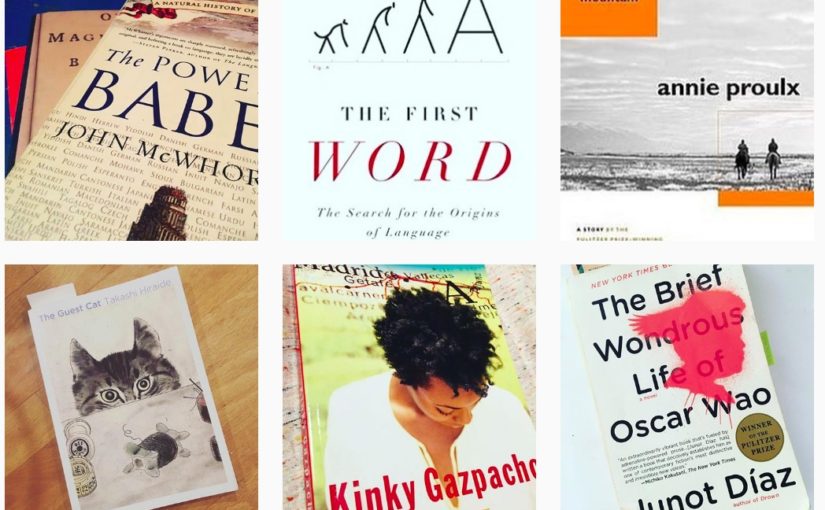
One of my resolutions last year was to only read books by women and writers of color for a year. My goal was to both read more and to push myself outside of authors who look like me.
I fell out of the habit, so rather than clear a book a month, this lingered for 18 months, but the last 12 books I’ve read fulfilled the goal. This has resulted in a couple lasting points for me: a recognition of authors from underrepresented backgrounds and a new reading habit of more smartly using my library card (thanks for the process, SACMW!)
There is an entire industry of creative productivity self-help resources. My friend Sean Blanda gave me ‘Manage Your Day-to-Day,’ one in a portfolio of books from 99U, an effort from Behance, the Adobe division where he works.
It was a quick and energizing read. Buy it for $8. As I like to do, I wanted to share a few of the directives I most acted on.
The fate of small, urban satellite cities and the role technology and entrepreneurship communities will have in their future is of interest to me. I recently wrote something about it for the Delaware state newspaper.
Today, any U.S. community preparing for the future is fostering a technology and entrepreneurship ecosystem. Delaware is too.
A recent News Journal op-ed on the matter didn’t take into account much of an organic, nascent community that is building toward a bigger impact. There are efforts in Newark, Lewes, Rehoboth and elsewhere, Wilmington, despite its challenges, already has the foundation of an innovation corridor. MORE
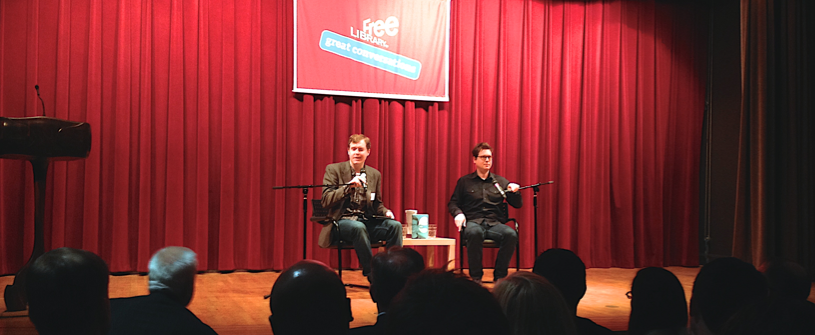
My line of questions can be seen here. I tried to to steer the conversation away from what has already been said by Stone, a well-covered tech entrepreneur who is in the midst of a popular book tour, but we still hit upon some of what has already been covered: the designer by trade has focused on bringing the human touch to software.
That helps explain how decidedly simple Twitter is and how Stone’s new startup Jelly, a network-driven answer app, has stayed focused on getting social responses.
In large scale projects, preparing to do the work is often more important than doing the work. That was likely the biggest lesson I drew from the book, which chronicled a failed attempt by a consortium of French government and business leaders to build a sea-level canal and then a painful but ultimately successful American attempt that used locks and came at the heels of advancements in understanding how to deal with yellow fever.
I also drastically underestimated the magnitude the Panama Canal represented as an engineering and public health campaign. My previous ignorance to this period of human history is embarrassing.
As I often do when I read a book of relevance to leadership and history, I share my notes here.
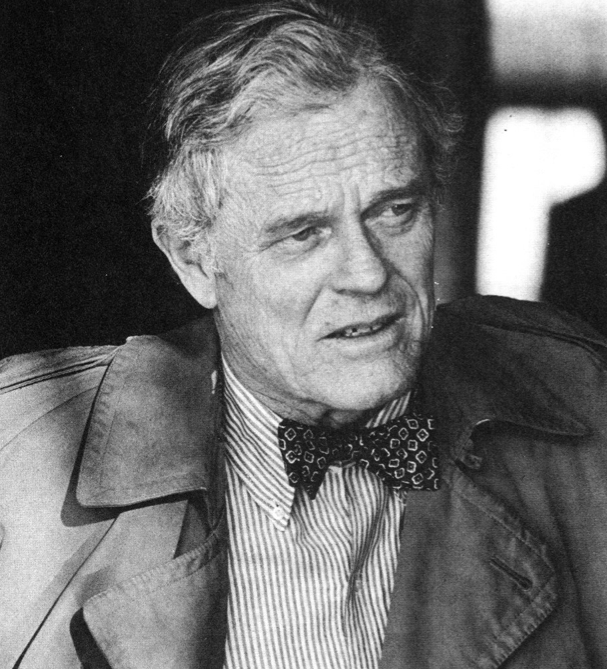
Sociologist E. Digby Baltzell. Photo from Penn Collection. Circa 1970.
Boston was built by Puritans, who celebrated civic power and class authority. Philadelphia was built by Quakers, who championed equality and deference.
Two hundred fifty years later, though considerably fewer people in those cities consider themselves a member of either group, their impact is still chiefly responsible for Boston outperforming and Philadelphia underperforming in their contributions to the greater world.
That’s the chief argument of the dense, heavily-researched, 500-page, 1979 academic classic Puritan Boston and Quaker Philadelphia, written by University of Pennsylvania sociologist E. Digby Baltzell (1915–1996). The core of the book is said to be based on some 300 interviews with Proper Philadelphians and Brahmin Bostonians, and part of a decades-long research focus that Baltzell had on his Protestant brethren — he has been sometimes credited with popularizing the “WASP” term.
This is a book that is a fabulous read for understanding Philadelphia and Boston, but it is also a treasure for those who love new perspectives on American culture, U.S. history and the development of cities.
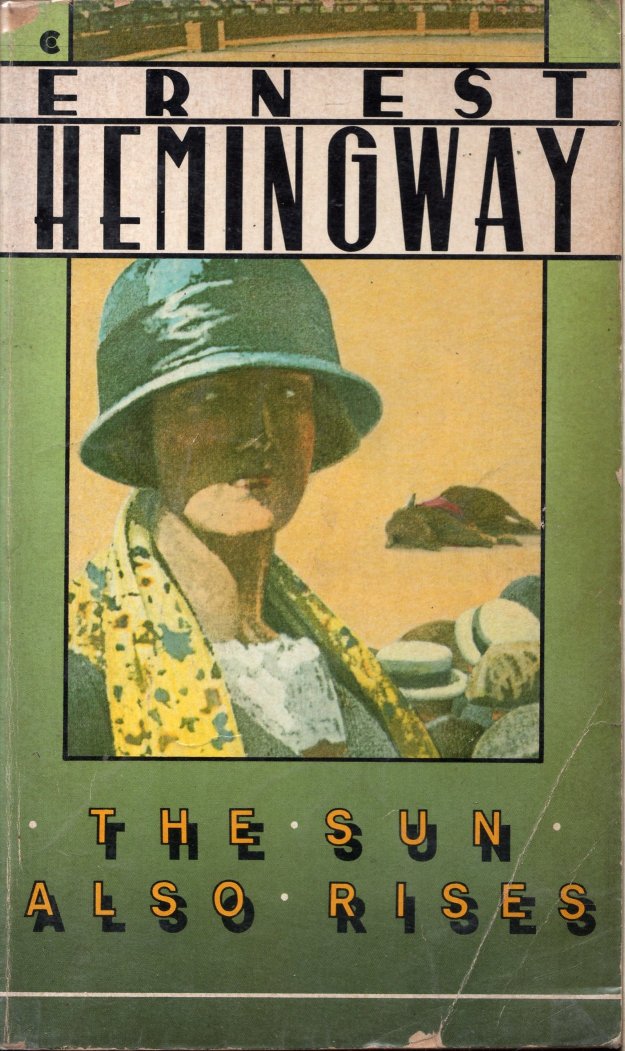
While taking train rides between the northeast section of Spain en route to meeting up with old friends at the San Fermin Festival, there is nothing else to be read other than the 1926 classic novel ‘The Sun Also Rises‘ from Ernest Hemingway, which follows a similar route.
The internet doesn’t forget. So I often stockpile perspective (links) for the future.
In 2009, we at Technically Philly were digging our heels into looking at how diversify revenue for a local community news site. In the end, the largest driver turned out to be events, specifically the annual Philly Tech Week we organize. Before then and after some advertising, jobs board and light underwriting revenue, we toyed with donations, gettingsome prominent support and the requisite pushback.
In all the experimentation back then, I saved some great insight, much of which has been relevant lately. As we move back to a new form of that older conversation, I wanted to share a few takeaways from my reading back in 2009.