Sustaining the craft, not developing the craft itself, should be focus of Knight and RJI

I’m late.

I’ve been invited to the Hardly. Strictly. Young.  conference on alternative ways to implement Knight Foundation recommendations at the Reynolds Journalism Institute at the University of Missouri [More on that later]. One of the fun precursors to the two-day event later this month has been participating in the Journalism Carnival of blogging, shepherded by conference organizer, Spot.Us founder and leather jacket-wearer David Cohn.

In January, I wrote about the role universities should play in creating journalism,  and in February wrote about two ways to grow the number of news sources. In March, I was supposed to write on what the Knight News Challenge should do next and how the RJI fellows program could be a part of curating that innovation.

Fortunately, in being late, I can point to others who already did it better than I would. No, Cohn, this isn’t a cop out, this is cutting my losses. The undercurrent on both of these questions for me is that I’m not worried about the craft as much as I’m worried about sustaining the craft.
Continue reading Sustaining the craft, not developing the craft itself, should be focus of Knight and RJI

Universities should host the newsrooms of their neighborhoods

Universities should host the newsrooms of their neighborhoods, towns and counties. If a university has a journalism department, college media and audience, this seems like a foregone conclusion.

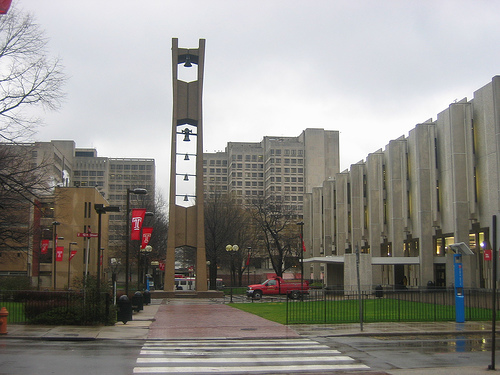
Picture Temple University. It is a big, diverse, robust, public research university with a clutch of respected professional schools and an expansive undergraduate population that has been slowly and controversially expanding into at least four different, distinct, overwhelmingly black neighborhoods around it.

When you drive south on I-95 east of Philadelphia at night, look off to your right while only the tallest skyscrapers are yet in view a few miles in the distance, the blur of bright lights made of a dozen square blocks and a cluster of high-rise buildings among a swath of stout two story row homes is the university’s main campus.

Halfway between those stadium lights and Philadelphia’s iconic City Hall is another beacon of light, that old White Lady, 400 North Broad Street, the legendary location of the Philadelphia Inquirer and its sister paper the Daily News.

Mood lighting isn’t the only lesson Temple should take from the investigators of the Inquirer.

Continue reading Universities should host the newsrooms of their neighborhoods

How to be a freelance journalist: real advice from another young, unknown journalist on freelancing

I am not going back to freelancing.

Last month, I came on full-time with Technically Media, a company I helped launch and produces Technically Philly.

Still, going back on my own, in some form, has returned me to thinking about and combing through some of the advice I collected in 2009, during my year freelancing.

Too many of those perspectives and resources seemed valuable to not share.

Continue reading How to be a freelance journalist: real advice from another young, unknown journalist on freelancing

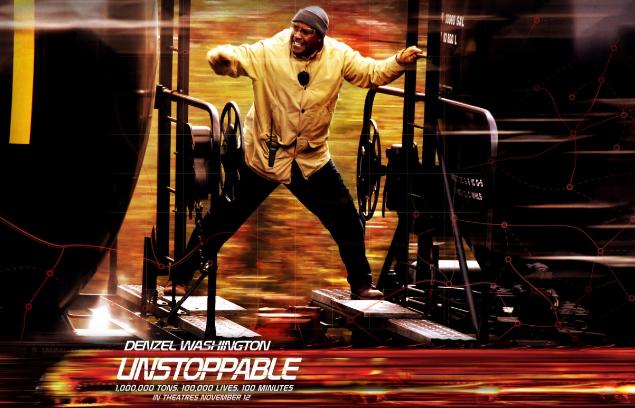
Telling stories with authenticity and complexity: or why Unstoppable sucked

Action movies are supposed to be implausible.

The action is meant to be superhuman — more violent, more outrageous, more daring and impossible than the last. They are not, then, in my opinion, necessarily good stories.

They can be entertaining — with explosions, scene cuts and new sights — but I don’t look for an action movie to tell a compelling story.

Recently, I saw Unstoppable, the new Denzel Washington movie. The promotion around the movie certainly had an action element to it, but the trailer and Washington’s past roles triggered to me a belief there might be something a bit more provocative to the movie.

There wasn’t. I didn’t particularly like the film, though I suppose I didn’t hate it, but it did make me think about what makes good writing and, really, helps make good journalism and what Unstoppable didn’t have elements of either.

Continue reading Telling stories with authenticity and complexity: or why Unstoppable sucked

Five interesting lessons from Jay-Z interview with Terry Gross

NPR Fresh Air host Terry Gross interviewed rapper and cultural icon Jay-Z last month and it proved one of the more interesting episodes of one of the best, longest-running radio shows around. Jay-Z was promoting his new book Decoded (about which Amazon has an interesting video interview).

You should go ahead and listen to the interview right now.

All the highlights are here, but you should look for these discussions in particular, all of which can be found in this transcript, in addition to another longer-form interview.

Continue reading Five interesting lessons from Jay-Z interview with Terry Gross

Lessons on creating an effective nonprofit newsletter

Pull media, like social networks, are incredibly powerful, but the power of the push media of email hasn’t much waned.

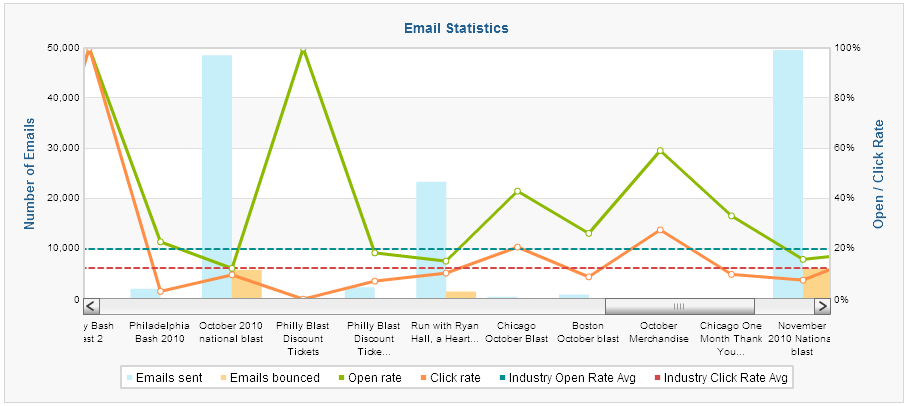
Nonprofits, companies and organizations still rely on its ability to land in the inboxes of busy readers, consumers and supporters. Since announcing that I’m leaving Back on My Feet, I’ve taken a bit deeper a look at the metrics behind the monthly newsletter and blasts that remains a large part of our outreach efforts.

I was proud of some progress we worked to make with our use of email marketing during my tenure there, though I didn’t find the time to focus on as much development as I would have liked (by offering more robust A/B tests and such).

More importantly, there are a dozen take aways, some of which may seem intuitive, that I can now comfortably call lessons:

Continue reading Lessons on creating an effective nonprofit newsletter

Fund My Media J-Lab ONA pre-conference highlights

The J-Lab Institute for Interactive Journalism held a pre-conference called ‘Fund My Media’ before the launch of the Online News Association annual conference Thursday.

Building on last year’s pre-conference before the ONA national event in San Francisco, the morning of discussions, speakers and panels were decidedly focused on keeping online editorial products alive: from foundation support, to events to other for-profit revenue. The event preceded the ONA conference held today and tomorrow.

You can watch the archived livestream of the morning’s sessions here.

Full Disclosure: In conjunction with the J-Lab Networked Journalism Collaborative project and funded by the William Penn Foundation, the OMG Center for Collaborative Learning has generously sponsored and supported my attendance here.

Yesterday’s ‘Fund My Media’ morning series of sessions were inventive and practical. Jan Schaffer and crew put together a rich, insightful, varied and fast moving event. It was a pleasure.

I shared a slew of thoughts, which I think will be updated, but here are some first thoughts for those who weren’t as fortunate to attend, and perhaps even those who have:

Continue reading Fund My Media J-Lab ONA pre-conference highlights

The Social Network: thoughts and reading on the Facebook movie

I tend to watch films in move theaters when I think they’ll have a particularly significant impact, will be worth remembering years from now and, of course, when I’m lured in by the story.

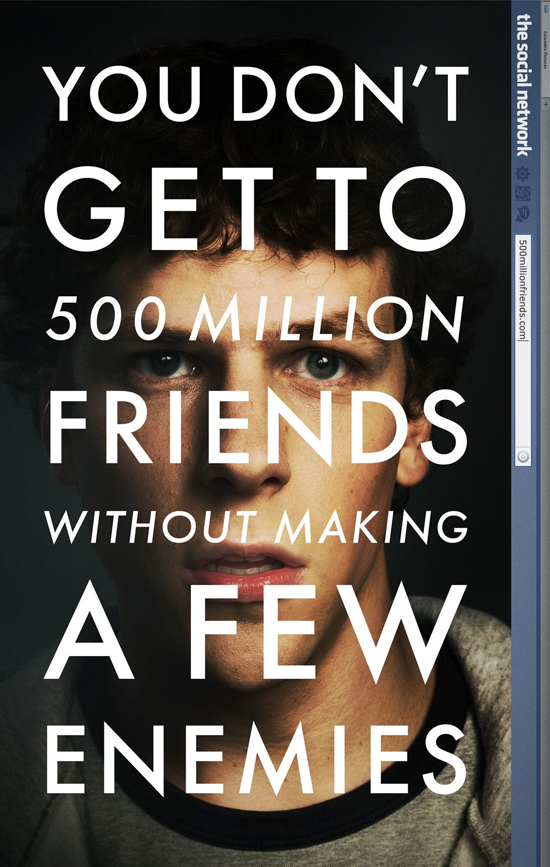
The Social Network, Aaron Sorkin’s film that tells with some literary license of the meteoric first-year rise of Facebook, fit the bill.

Last week, I saw and was greatly entertained — call it a 9 out of 10, not perfect but sure close and worth the price of admission.

Continue reading The Social Network: thoughts and reading on the Facebook movie

The Wire: yeah, the HBO Baltimore drama is mad decent

I take something of pride in sometimes indulging in great cultural luxuries long after their novelty has waned.

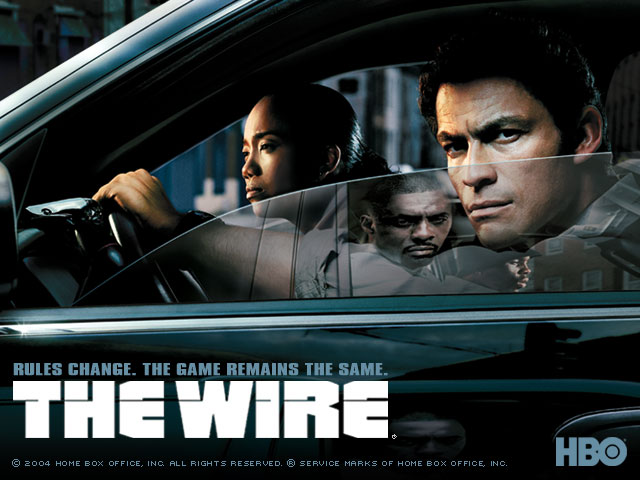
With that knowledge, I’ll share my thoughts on finishing the complete five-season DVD set of celebrated HBO drama ‘the Wire‘ to encourage readers to watch it again, assuming you’ve seen the show at some point since it first aired in 2002.

It’s not difficult at all to piggyback that suggestion onto the concept of the state of media and the future of news.

David Simon, the creator and primary writer of the serial drama based on the inner-workings of drugs, policing and politicking in gritty post-industrial Baltimore, was himself, quite famously, a newspaper reporter for the Baltimore Sun, giving him a career of insight.

Notably, each of the five seasons take on a different focus of the Baltimore city structure — from the drug trade, to unions to policing to, yes, reporting. So in the past few weeks after finishing the final season, I’ve delved into writing, stories, concepts and conversations. Even if you know the show well, it might be worth seeing what’s out there and, yes, connect it to media.

Continue reading The Wire: yeah, the HBO Baltimore drama is mad decent

Three most relevant, mentioned and impactful Philadelphia columnists write in a niche

Eighteen months ago, I was searching for the best metro columnist in Philadelphia.

I felt the Inquirer’s Dan Rubin was the nearest in a legacy of citywide voice boxes, telling the broadest and widest ranging stories. Perhaps that’s true.

But it’s been nagging me that outside of some media-focused friends — and even then — I never hear Rubin or his other traditional columnist colleagues with any sort of regularity.

Instead, the columnists whose names I read, hear mentioned and myself reference the most are increasingly niche orientated. They’re not writing about the city, they’re writing about and for a very narrowly focused part of it. These are other critics and writers who have long existed in newspaper parlance, but I believe the increasingly niche-dominated media ecosystem means their voices carry greater power than before.

Continue reading Three most relevant, mentioned and impactful Philadelphia columnists write in a niche