How Technologies of Connection Tear Us Apart

We assume more information means we’ll like people more because the people we know best tend to be people we know the most about. For ages, we’ve predicted more and faster information would end war. But we forget the many people whom we spend less time with once we learn more about them.

This is a very normal human process that has been industrialized by social media. The “online disinhibition effect,” in which we share more online so there’s no small talk like neighbors but rather ” “deep cascading dissimilarity.” This is Wilder’s sense of proximity.

That’s from Superbloom: How Technologies of Connection Tear Us Apart, a new book from journalist Nicholas Carr. As Carr writes: “By turning us all in the media personalities, social media has also turned us all into rivals.”

Chart communications technologies over time, and Carr says they came in three stages. First, the machines were just carriers (telephones, telegraph, early internet), then they began to exert editorial influence by social media algorithms curating, and now AI threats to also create the content. This gets us more and more, but runs in the “naive view of information” problem that historian Noah Yuval Harari has also argued: “Information has no essential link to truth,” and so more information does not necessarily lead to more truth.

Carr’s Superbloom is enjoyable and enlightening. I recommend it. Below my notes for future reference.

Continue reading How Technologies of Connection Tear Us Apart
Remarks: Tech meetups shape economic mobility

Below are my notes, and video, from the remarks I offered to kickoff the second day of our Technically Builders Conference, which also doubled as the closing of the 15th annual Philly Tech Week. It informed this story we published on Technically. My slides are here.

Starting in 1975, the Homebrew Computer Club was a regular gathering of tech enthusiasts in northern California.

The group was made famous for inspiring Apple founders Steve Jobs and Steve Wozniak. But hundreds of computer clubs emerged around the country then. The Philadelphia Area Computer Society (PACS), for example, was first organized in spring 1976.

You don’t have to care about a few dozen computer nerds getting together 50 years ago. How they did has shaped the work we do, though, and has a few lessons for our future.

Continue reading Remarks: Tech meetups shape economic mobility

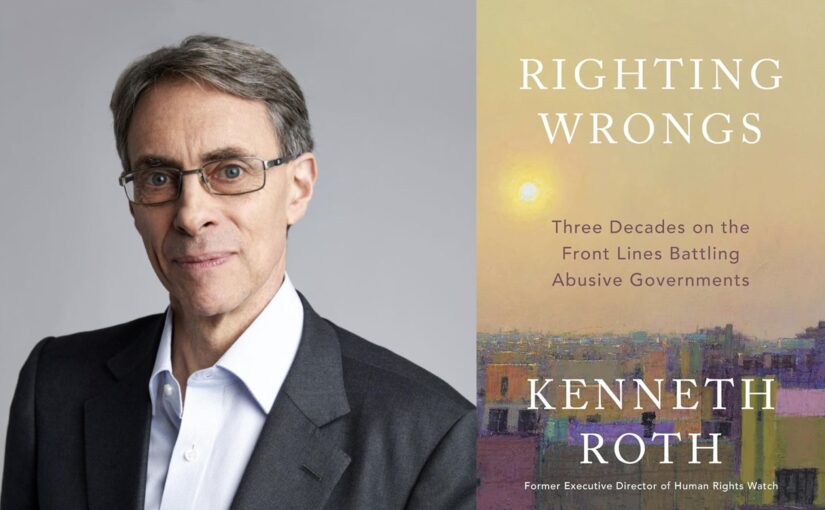
Appeal to the “movable middle,” says Human Rights Watch veteran leader

Shame the extremes with facts, not name calling or exaggeration. Appeal to the “movable middle.” Document. Build coalition methodically. 

That’s the playbook outlined in Kenneth Roth’s new memoirs called Righting Wrongs: Three Decades on the Front Lines Battling Abusive Governments. It’s drawn from his nearly 30-years as executive director of Human Rights Watch. He is someone I deeply admire.

The book offers an insider’s perspective on the organization’s strategies to expose and combat human rights abuses worldwide. Central themes include the use of “naming and shaming” to hold perpetrators accountable and the challenges of advocating for human rights in a complex geopolitical landscape. 

 Below I share notes for future reference.

Continue reading Appeal to the “movable middle,” says Human Rights Watch veteran leader

Keynote: The case for storytelling (for entrepreneur-led economic development)

Below are my notes, and video, from the keynote address I used to kickoff Technically Builders Conference. It informed this story we published on Technically. My slides are here.

Maria Romero has 90 days to find a job — or she gets deported.

In December, the Mexico City native completed her MBA in marketing analytics at Philadelphia’s Drexel University. She’s young, educated, with in-demand skills. The kind of immigrant Americans across the political spectrum say we want.

And yet: Maria is worried. It’s February 2025 when the Technical.ly newsroom first meets her — 30 days left, tick tock tick tock. Higher interest rates have ended the tech hiring boom. Volatility is everywhere. Her STEM degree and F1 visa gives her years to work like any American citizen — no quirky paperwork, not even modest immigrant sponsorship costs. But she’s nervous anti-immigrant rhetoric is making a tough hiring climate worse for her.  Forget about paying bills, if she doesn’t get a job she’ll get kicked out of a city, out of a country, that she was ready to call home.

She applies to more than 500 jobs. She does coffee meetings, texts friends, has her story told by a news outlet and responds to inbound outreach. She also keeps on living — she walks her dog, she goes to restaurants she loves. 

The thing we do before our life changes forever is almost always mundane.

Continue reading Keynote: The case for storytelling (for entrepreneur-led economic development)

My response to a troll

I have a troll. I’ve had them before, and I’ll have them again. This one though has passed more standard comments and emails, and has shown up in person. He was there a year ago when I got struck in the face at an event by a protestor I had to remove. Now, last month, he wrote up and printed hundreds of flyers with a long missive about me. He and some others posted them up on poles around my work conference, and handed many more to the volunteers at the conference’s registration table.

I do not think about this man, but gosh, he sure does think about me — he appears to be a retiree with a lot of free time. (I’m beginning to assume he kinda has a thing for me). His attacks were fairly strange, but easy enough to dispute that I thought I’d do that here for my own well-being.

Continue reading My response to a troll

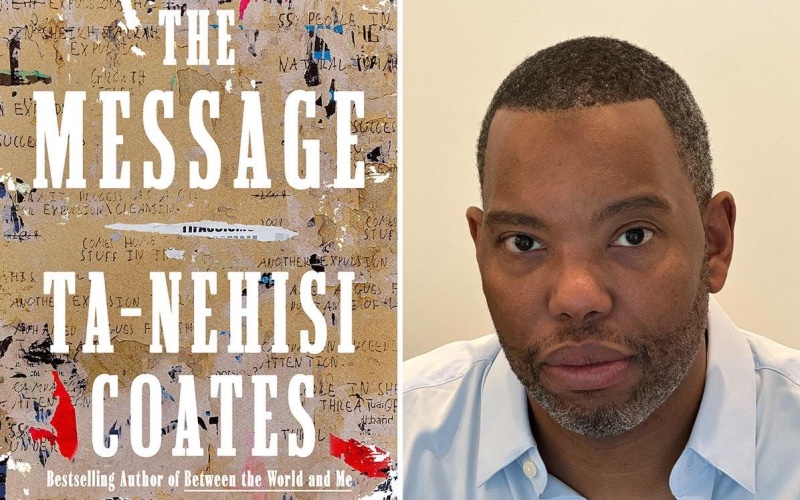
The Message by Ta Nehisi Coates

Every story is imbued with the biographies of those who hear and repeat it. And so each story gets distorted some. We can lose the author’s original intent.

It’s fitting then that I came to assume that Ta-Nehisi Coates’s new collection of essays published in the fall — one year after the Hamas attack on Israel — was exclusively about the Israeli-Palestine conflict. Notably including a CBS Morning interview, what I heard about the book was centered on the conflict.

Instead “The Message” is a curated archive of private reflections and political commentary informed by short trips Coates took to several locations to reflect on race, justice and U.S. foreign policy. Just the final chapter features a few days he spent in Israel and Palestine. The book’s overall message is less about any single conflict and more what he describes as a moral responsibility of the writer to speak plainly in moments of great public consequence.

Below my notes.

Continue reading The Message by Ta Nehisi Coates

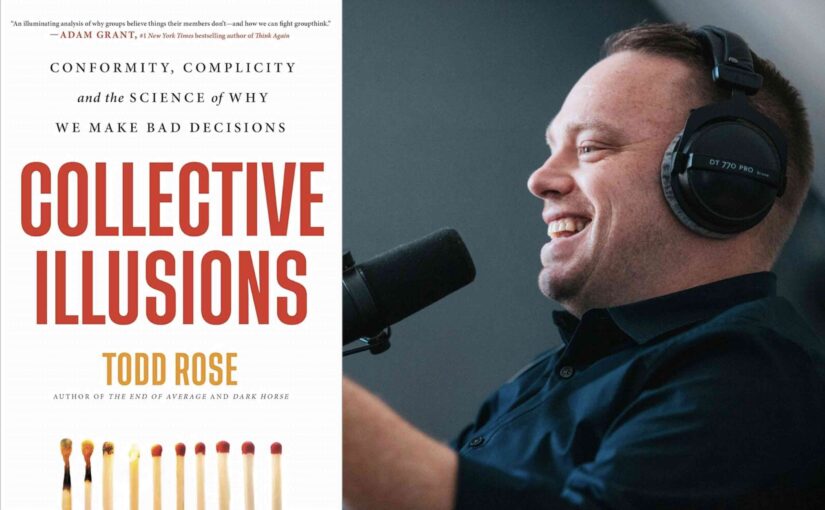
The electability of female candidates and other “collective illusions”

Most Americans report no real difference in how likely they’d be to support a female candidate over a similar male one. The difference is that more Americans think that other Americans would be less likely to support a female candidate. They believe others believe something.

That’s an example of what some researchers call “pluralistic ignorance,” and comes from Collective Illusions: Conformity, Complicity, and the Science of Why We Make Bad Decisions, a February 2022 book by Todd Rose, who leads a nonprofit polling and think tank. As the title implies he calls these examples “collective illusions,” and there are many.

Most Americans still identify as patriot; bad actors really do use bots to amplify otherwise unpopular extremist political views and we really did create a toilet paper shortage during the covid-19 pandemic. As Rose puts it: “When individuals conform to what they think the group wants, they can end up doing what nobody wants.”

This is especially true about bad, or simply incorrect, ideas we hear again and again: “Like a glitch in our biological software, repetition has no logical connection to truth. Yet it has somehow become a trap door to our beliefs.”

Rose’s book is sharp, thoughtful and interesting. I recommend it.

Below I share my notes for future reference.

Continue reading The electability of female candidates and other “collective illusions”

Jimmy Lai, Hong Kong’s troublemaker

What’s the greater priority: universal human rights or sovereign rights? What rights, if any, are truly universal? How far should other nations go to challenge a sovereign power who is taking such rights away from residents within their boundaries?

After the horrors of the world wars, the United Nations marked in 1948 its “Universal Declaration of Human Rights.” This gave moral currency to dozens of international actions over the next 80 years. The drafting committee included philosophers from China and Lebanon, yet these are criticized by some as Eurocentric. Overreach under the UDHR banner complicated its message, and gave authoritarians greater cover.

Where does that leave us? I’ve thought about that since completing “The Troublemaker: How Jimmy Lai Became a Billionaire, Hong Kong’s Greatest Dissident, and China’s Most Feared Critic,” a 2024 biography written by Mark Clifford.

Continue reading Jimmy Lai, Hong Kong’s troublemaker

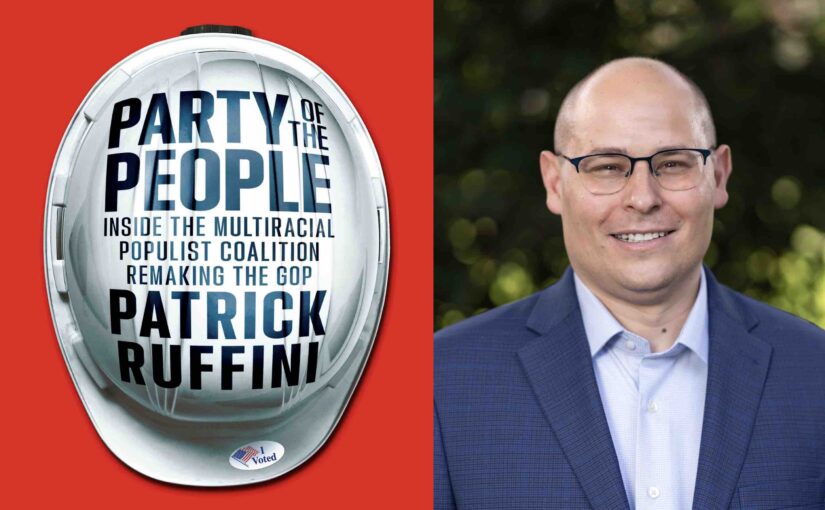
Inside the Multiracial Populist Coalition Remaking the GOP

In 2002, The Emerging Democratic Majority book based its arguments on two key points: that the population of the United States was becoming less white, and that non-white voters voted for Democrats more often than Republicans.

Though the multiracial Obama coalition seemed to make their case. The Trump era has looked very different. In 2023, within the Biden presidency, Republican strategist Patrick Ruffini wrote “Party of the People: Inside the Multiracial Populist Coalition Remaking the GOP,” which looked prescient in November 2024.

Looking closely at the 2016 and 2020 elections, Ruffini argued that Hispanic, Asian and mixed-race voters were following voting patterns of immigrants before them. Very unlike Black American voters, and Native Americans too, with their distinct historical context, waves of immigrants often vote their liberal interest, then grower richer and vote a different interests.

The Emerging Democratic Majority rightly demonstrated how much more diverse the American electorate would get, but badly misunderstood how that more diverse electorate would vote. The 2024 election put this on full display: Democrats look like a party of rich, educated people, alongside Black supervoters; whereas Republicans look now like a multiracial populist coalition. This is so far from the Republican jokes that left-leaning voters told in the 2000s and 2010s. Whatever comes to pass, the book is rich with insight.

Below my notes for future reference.

Continue reading Inside the Multiracial Populist Coalition Remaking the GOP