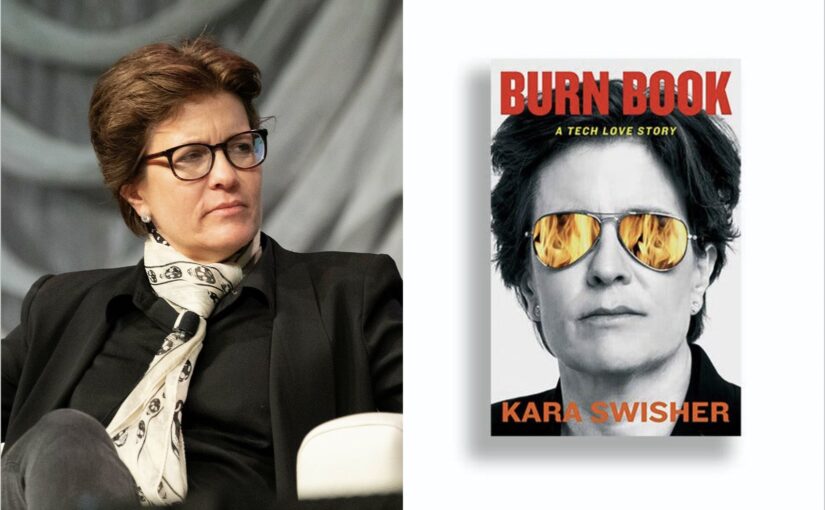
Burn Book by Kara Swisher

Thirty years of tech journalism faces similar challenges to other beat reporters, like getting too close to sources and missing broader trends. Other characteristics are unique to tech-savvy journos: having an entrepreneurial bent, relying on live events, both for news and for revenue, and being especially entrenched in a community you help grow but also report critically on.

Among tech reporting’s founding disciples is Kara Swisher, who published earlier this year a memoir called Burn Book: A Tech Love Story, and knows these challenges well.

The influential, if controversial, veteran went from Washington Post to Wall Street Journal, before launching with her mentor Walt Mossberg a conference series and then an independent news site All Things Digital. She went on to a series of ventures and editorial posts. She’s among the longest-running Silicon Valley insider-journalists — and in that way, the godmother of the journalism I’ve brought to second-wave geographies with Technical.ly.

She’s navigated extended disclosures and been called both overly boosterish and too critical. In my far smaller way, it’s all familiar to me. I enjoyed the book for that reason, though it grated on me in other ways. Even for someone as accomplished as she, the book reads as self-aggrandizing — very few mentions of her staff, and even fewer expressions of where she had fallen short. Nearly everyone she introduces appears to have failed to take her sound counsel.

Yet I do respect what she did for our craft, and I appreciate her in contrast to the longer-running Silicon Valley insider publication TechCrunch, founded in 2005 by investor Mike Arrington. She defines herself as a teller-of-truths to power, calling Silicon Valley “assisted living for millennials.”

I, too, have navigated cheering on good, dynamic parts of our economy with its frequent misuse. Big tech wants to be regulated lightly like media companies but they want to be blameless for how their platforms are used, like a telephone company. The age of the internet and software has meant near infinite scaling, resulting in untested boy kings like Mark Zuckerberg, whom Kara has long criticized.

As she writes: “The innovators and executives ignored issues of safety not because they were necessarily awful, but because they had never felt unsafe a day in their lives.”

That much has influenced how I balance my work. Below I share my notes for future reference.

Continue reading Burn Book by Kara Swisher
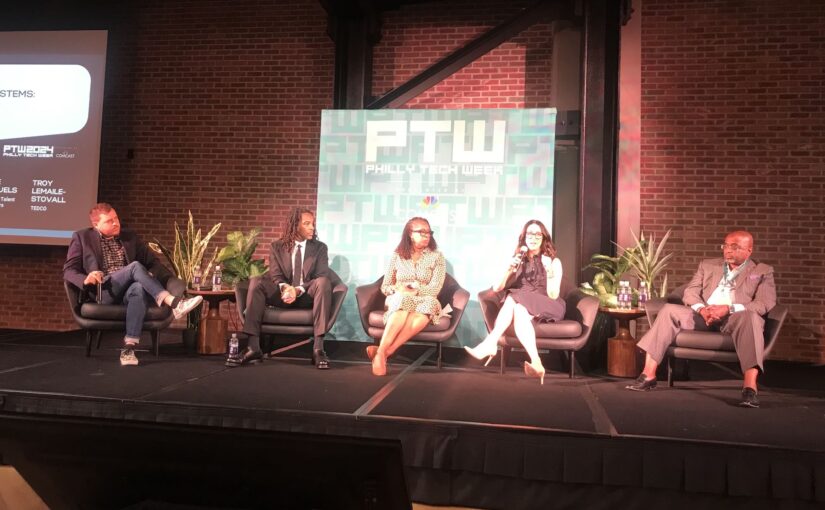
My Technical.ly Builders Conference keynote May 2024

Well the video crew somehow damaged the file of my speech, but I gave the keynote at Technical.ly’s annual Builders Conference back on May 8.

I published the themes on Technical.ly here, here and here. I wanted to share the full video here, but no luck. I do have my full notes below.

Continue reading My Technical.ly Builders Conference keynote May 2024

The Creative Spark of humanity

Hominins are a bush of species millions of years old, not one line leading to homo sapiens. Even if we’re the last standing. Our defining characteristic is coordination and creativity.

That’s from the 2017 book “The Creative Spark: How Imagination Made Humans Exceptional” written by anthropologist Agustín Fuentes.

I enjoyed his curation of academic research into an approachable narrative. Below I share my notes for future reference.

Continue reading The Creative Spark of humanity

Why the kids aren’t growing up

Do less for your kids. Give them rules and discipline and love. Don’t be their friend. Be their parent. Let them be bored, let them screw up. Teach them no, please, thank you and table manners. An industry of psychologists and gentle parenting help on the margins but likely cause more damage than help.

That’s from conservative author Abigail Shrier’s new book Bad Therapy: Why the Kids Aren’t Growing Up.

The book starts off with a big, wide criticism of therapy and mental wellness, of which I was skeptical. But as Shrier turned to its impact on parenting styles, my interest grew — especially as a parent of young children myself. In the end, I found it to be a welcome contribution to Jonathan Haidt’s high-profile Anxious Generation.

Below I share my notes for future reference.

Continue reading Why the kids aren’t growing up

Temple University is a mess. Let’s fix it.

This was originally a social media rant published here.

Temple University is a mess. Let’s fix it.

I’m an alumnus of Temple, and a resident of Philadelphia, but even if you aren’t either of those things, what the school represents can matter to you if you care about the future of cities, and economic mobility and, sure, higher education too.

Continue reading Temple University is a mess. Let’s fix it.

Atomic Habits

Almost half of our actions on any given day are done out of habit. So forget about setting goals, and instead focus on the systems that are most likely to lead to those goals.

That’s from the popular 2018 productivity book from James Clear called “Atomic Habits: An Easy & Proven Way to Build Good Habits & Break Bad Ones.”

Clear’s book is full of tie backs to his newsletter and online courses, for which he has been criticized. Careerist as he comes across, the book is helpful, if only that central premise: “Habits are like the entrance ramp to a highway” of behavior, he coffers.

As he writes: “You do not rise the level of your goals. You fall to the level of your systems.”

Below I share my notes for future reference.

Continue reading Atomic Habits

Coded by Kids named me a ‘Champion for Change’

Celebrating the 10th anniversary of Coded by Kids, leaders of the youth engagement nonprofit honored others. I was flattered to be among them.

I remember hearing about Sylvester Mobley spending time at a South Philly rec center to offer basic computer and coding classes to young kids there. Soon after Technical.ly profiled his work, and I later joined their first board of directors, where I also met his wife and partner Danae Mobley. I’ve worked closely with both, especially Danae of late in her role leading 1Philadelphia.

Since I’ve known them both for so long, and challenged and collaborated them too, it meant a lot for Danae to say nice words and call me a “champion for change” at an event last night filled with other stakeholders and partners. Thanks friends.

For regional startup cities to stand out, be true to yourself

I joined Chattanooga Tennessee Mayor Tim Kelly, and Joe Kirgues, the cofounder of the startup accelerator provider gener8tor, for a discussion at COLLAB. It’s the well-polished mobility- and quantum-themed conference produced by that city’s entrepreneur support organization.

Our theme? How do small city’s stand out. My push? Talk to each other, find a consistent narrative. Be authentic, honest and repeat those people stories.

I ended up filing this story after the conference and a quantum piece here. I also hosted a webinar on the U.S. Southeast’s entreprenuership activity.

I got hit in the face and escorted a protestor from an event. What happened?

About 20 minutes left in the evening reception, and a 20-something fella came running up to me: “You got a big problem, and you better come with me,” he said, and turning.

What first crossed my mind was someone was having a health emergency. Instead, I walked into the emptying main ballroom, where perhaps 100 people so remained. A half-dozen technology exhibitors were there, including a high-school robotics demo and a chocolate 3D printer. This was the tail-end of the closing reception of my news organization Technically’s annual conference, which itself was the close of Philly Tech Week, an open-calendar of community events we founded.

It got weird.

Continue reading I got hit in the face and escorted a protestor from an event. What happened?

Ban smartphones from schools

Parents and schools should treat social media like they do cigarettes — unhealthy addictions that are distracting from learning and development.

That’s the big argument in “The Anxious Generation: How the Great Rewiring of Childhood is Causing an Epidemic of Mental Illness,” a new popular book by psychologist Jonathan Haidt that has gotten widespread media attention.

“Social media use does not just correlate with mental illness,” he writes: “It causes it.”

Haidt has written several books on living healthier and happier, and he has researched social media use for years. But it’s this book at this time that met the moment: I’ve seen him interviewed by countless national media and at conferences. His advice marks one set of strategies for how parents and wider society can respond to the mounting evidence that algorithmic feeds of addictive content is especially challenging for children to overcome.

Below I share a few points I’m taking into my own parenting.

Continue reading Ban smartphones from schools