What is human consciousness?

Consciousness is “under siege.”

Suddenly lightning-fast computing seems to recreate tasks we commonly associate with intelligence. Yet we’re unprepared as a society to define, let alone create and control, something as pervasive as being. Across close to two-dozen scientific theories of why consciousness appears at all, the so-called “hard problem of consciousness,” none has widespread agreement.

We’re behind in part because at the dawn of the Enlightenment, early scientists focused on measurable phenomenon, in part because they believed that leaving the soul to the church would avoid a political backlash. That allowed hundreds of years of scientific flourishing, but left an underdeveloped sense of self.

That’s from A World Appears: A Journey into Consciousness, a 2026 book by author-science journalist Michael Pollan. Across dozens of interviews and an approachable survey of the research landscape, he ably walks the reader through what we know now. Two stages are easier to test than the two later ones, since it requires consciousness to describe consciousness, but to put it simply:

  • Cognition is processing information, perhaps by instinct
  • Intelligence is, as William James defined it, “a fixed goal with variable means of achieving it”
  • Sentience is a precursor to consciousness, or, as Evan Thompson described it, “the feeling of being alive”
  • Consciousness is a sense of self, of knowing you know

It’s a fun book, I recommend it.

Below I share my notes for future reference.

Continue reading What is human consciousness?
The risk-taking that connects Wall Street, Las Vegas and Silicon Valley

A certain approach to risk and decision-making spans Wall Street, Las Vegas, Silicon Valley and, yes, even cryptocurrency libertarianism. Not all of it’s good, but some is.

It’s important to understand this community and worldview. That’s from On the Edge: The Art of Risking Everything, a 2025 book by popular statistician Nate Silver.

The book is at least 150 pages too long, and needed a more disciplined edit. The author says he had three book proposals: gambling, AI and game theory. As far as I can tell, he combined them all. The bloated book has detailed poker gossip, historical passages about Las Vegas and biography of Steve Wynn. Lengthy passages detail how LLMs work and the personalities behind game theory. It’s all moderately interesting but bizarrely off focus of his book, in my read.

I happen to like the stuff, but I kept finding myself circling passages that could have been edited away. Regardless, I took away plenty of charming little details.

Below I share my notes for future reference.

Continue reading The risk-taking that connects Wall Street, Las Vegas and Silicon Valley

China is an engineering society, and the United States is a lawyerly one

The world would be better of if the United States would give engineers more influence, and if China would defer more to lawyers.

The Americans have built a lawyerly society, and the Chinese have an engineering one. The two nations have more in common than they might realize, and so they’d both do well to learn more from one another.

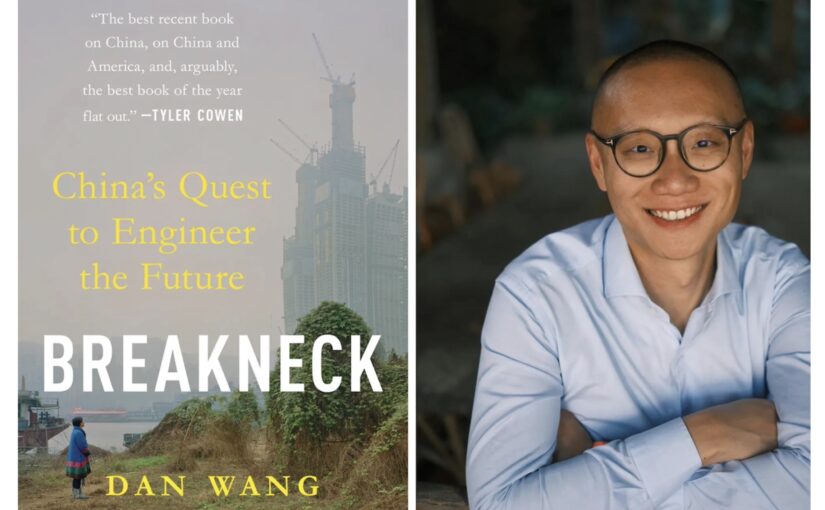
That’s from the 2025 book “Breakneck: China’s Quest to Engineer the Future” by technology analyst Dany Wang.

It’s one of my favorite books of the year: Fun, fast-moving and authoritative. At the heart of the world’s two-state superpower battle, the author argues: “This contest will be won by the country that works best for the people living in it.”

In the greedy late 20th century, American policymakers and executives failed to grasp the importance of “process knowledge.” Boeing and GE traded engineering knowledge for shorter-term Wall Street gain. By 1992, Michael Boskin, an influential economic adviser to the first President Bush, famously said: “Potato chips, computer chips—what’s the difference?” They got it.

Below I share my notes for future reference.

Continue reading China is an engineering society, and the United States is a lawyerly one

How a poem’s 1417 rediscovery shaped the Enlightenment

The concept hooked me: Lucretius’s On the Nature of Things, a materialist Roman poem, gets rediscovered in 1417 by book-hunter Poggio Bracciolini, and its ideas — atoms, a universe without divine design, pleasure as a worthy pursuit — help crack open the modern world.

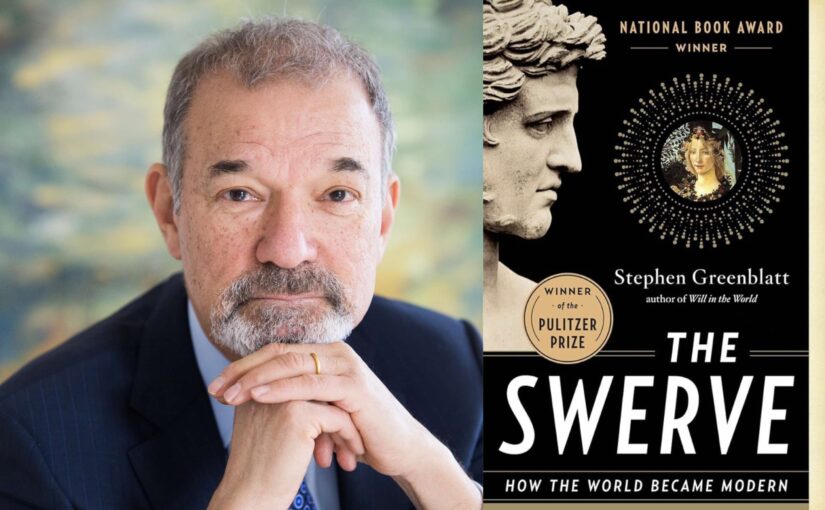
That’s the setup of The Swerve: How the World Became Modern, a 2011 book by historian Stephen Greenblatt that won both the Pulitzer Prize and National Book Award. I just read it.

What I actually wanted was the origins story: how could anyone in the centuries BCE arrive at “atomism” at all, with no microscopes and no evidence? The book gave me less of that than I hoped, so I went digging on my own — and that turned out to be the more rewarding part. The answer: ancient atomism wasn’t a discovery. It was a logical deduction. Parmenides had argued that nothing can come from nothing and therefore change is impossible; Democritus’s answer was tiny, eternal, uncuttable bits (atomos) rearranging in a void. It only looks like modern science because the word survived. The concept was independently rebuilt on real evidence 2,000 years later.

Which reframed the whole book for me. The Swerve isn’t really a book of ideas — it’s a beautifully written, story-forward narrative built on a single irresistible image: a lone bibliophile pulling a lost masterpiece off a monastery shelf at exactly the right moment to change everything. That’s why it won: gorgeous prose, a great yarn, and a secular-humanist thesis that landed perfectly in the science-vs-religion mood of 2011.

The insight I want to keep: Greenblatt’s book is itself an example of its own thesis. It’s a work that met its moment — the right idea, well-told, arriving when the culture was primed to reward it. Drop it into today and I’m not sure it wins anything. Books, like the texts they’re about, get lucky in their timing.

Below I share my notes from the book for future reference.

Continue reading How a poem’s 1417 rediscovery shaped the Enlightenment

Moravec’s Paradox

This was original a social video post

I want AI to do my dishes and laundry so that I can do art and writing, not for AI to do my art and writing so I can do more dishes and laundry.

That 2024 tweet went viral. And there’s a name for this: Moravec’s Paradox, and it dates back to 1988, from a machine learning researcher.

Continue reading Moravec’s Paradox

Immigration creates a “lake society,” rather than a stagnant swamp

Immigrants are neither villains, nor victims.

The through put in any economy is where dynamism comes from to get a “lake society”, rather than a stagnant swamp.

More to the point, foreign workers tend to not be the same as native workers, and when that’s the case everyone benefits. So that should be the focus, less displacement and more a core component of how an economy thrives.

That’s from The Truth About Immigration: Why Successful Societies Welcome Newcomers, a 2024 book written by Wharton School professor Zeke Hernandez.

In truth this pro-immigration stance is something of a straw man. Overall, even amid partisan American culture war, as I frequently report, high-skilled immigration is bipartisan— regardless of campaign rhetoric. It’s among the few things we agree on.

Instead, in many societies the question is what is the right level of immigration.

Below are my notes for future reference.

Continue reading Immigration creates a “lake society,” rather than a stagnant swamp

“If Anyone Builds It, Everyone Dies”

The alchemist who takes on the king’s trial to attempt to turn lead into gold. If he does so he gets fabulous wealth for all around him. If he doesn’t, everyone dies.

Believing it impractical to stop everyone else’s from trying, he decides that he is the best shot because he has the most discipline. His sister begs him not to, but he goes anyway.

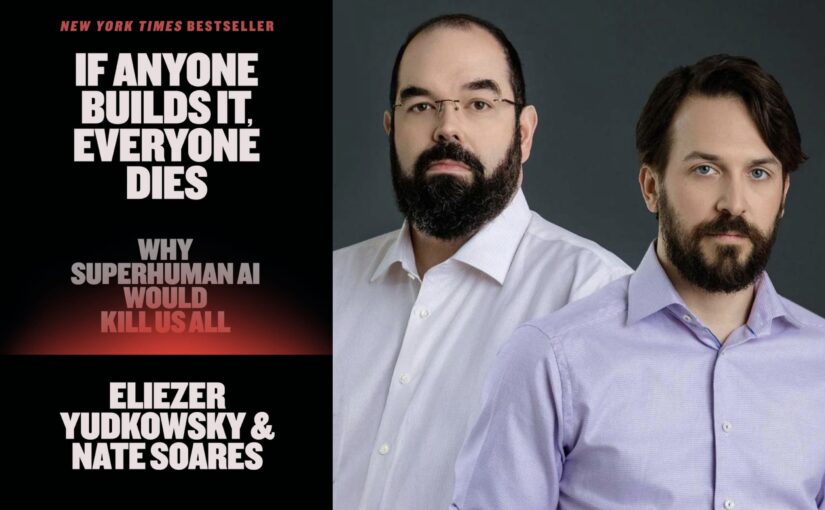
That fable opens the 11th chapter of the comfortingly named “If Anyone Builds It, Everyone Dies,” the fall 2025 book by Eliezer Yudkowsky (“the prophet of AI doom”) and Nate Soares.

To their credit, the book is more reasoned than the title might suggest (It’s clearly an effective book title). They say again and again that they do not know the timeline: AI research, then, they say is a ladder on which each rung is billions of dollars but if anyone reaches the top everything explodes — and no one knows how long the ladder is.

Their argument is competition between China and the United States is silly: Nobody “has” ASI (or AGI ), only it has itself, is their argument. That’s because there’s no telling where a superintelligence will go.

For example, they point out, as hominids began their evolutionary branch, there was no telling that we’d love ice cream so much (many subordinate goals brought us here). Why would we assume we could ever guess the eventual needs and wants of a super intelligent technology? One gradient descent path can be unpredictable and make “surprises” stable. For example, the sexual preference of peahens for males with more flowery feathers meant their procreation outpaced a higher rate of being eaten.)

Below I have my notes for future reference.

Continue reading “If Anyone Builds It, Everyone Dies”

Let Them

Commercially successful self-help authors have a story that a book-buying audience wants to hear. That message lands simply and clearly for those who need it, and may not seem like much to anyone else.

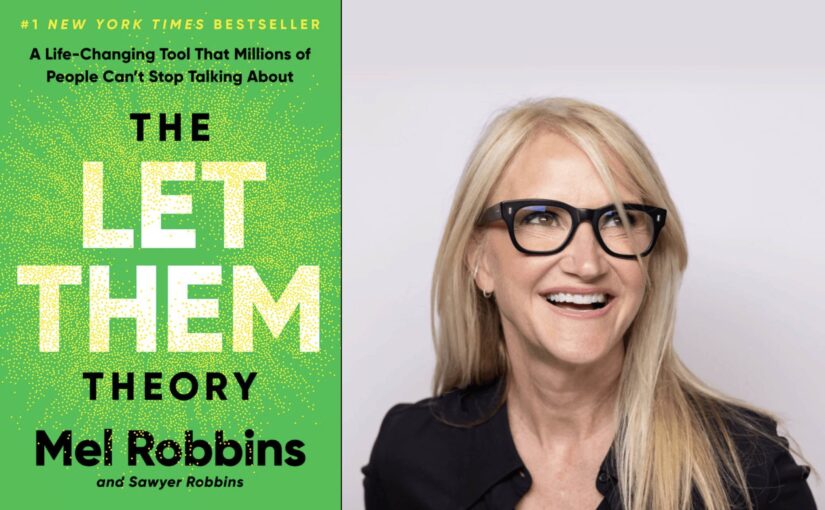
So it is with The Let Them Theory, the 2024 book by Mel Robbins, a former CNN legal analyst and self-help star, that has sold 10 million copies. I got the book to better understand this category, which frequently spawns coursework and speaking careers from tidy packages and simple ideas.

Continue reading Let Them

Gubernatorial conversations

I’ve recently interviewed a pair of influential elected officials: Delaware Gov. Matt Meyer and Maryland Lt. Governor Aruna Miller. I filed Technical.ly stories. Find the live recordings of my interviews and links to my reporting below.

The Technical.ly beat once felt less directly state relevant, but that’s shifted in recent years, with the rise of industrial policy and the importance of entrepreneurship. As publisher, I’ve seemed like a good starting point for direct interviewing, though our newsroom has long interacted with these and other elected officials at the state level around policy and one-off engagements. This marks something that will likely be more direct and more frequent now, reflecting our beat’s growing profile.

Continue reading Gubernatorial conversations

The corporation was invented to serve the people

Apple and Amazon are valued by public markets far in excess of their tangible assets, because of their “intangibles” in R&D and brand recognition. By historic standards, they own very little.

In contrast, AerCap and Prologis are among the world’s largest owners of the “means of production.” One leases aircraft to most large airlines. The other is the world’s largest industrial real estate company, leasing warehouses and data centers. They own the stuff.

Both “are nevertheless rather unimportant intermediaries in the modern economy” that now reflect “a long chain of intermediation” that means the system is more distributed. Yet our view and language about how companies fit into our world hasn’t changed.

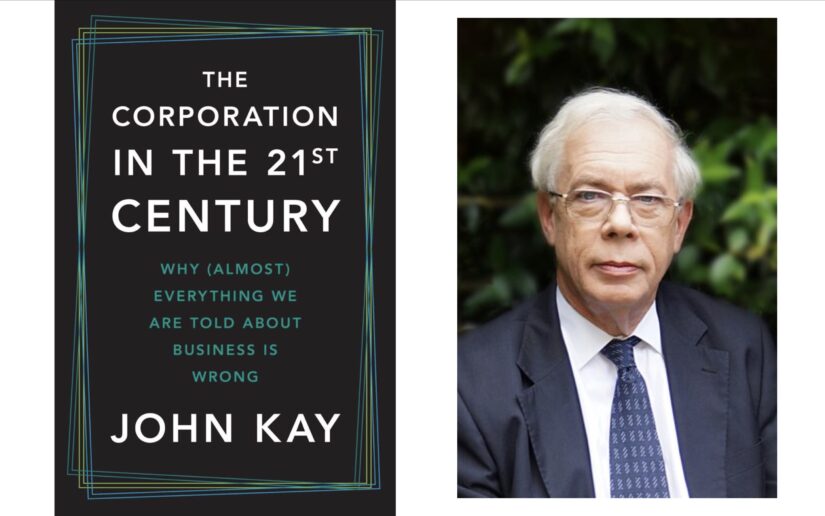
That’s from The Corporation in the Twenty-First Century: Why (Almost) Everything We Are Told About Business Is Wrong, a 2024 book by knighted economist John Kay.

The old industrial meaning of “capital” meant the owned means of production — mills, railways, steel plants, assembly lines. In many modern firms, Kay argues, those assets are fungible, often rented, and less important than the firm’s collective capabilities.

Among his criticisms is how today’s shareholder priority has distracted from the corporation’s origins as a device of the state. Executives can extract value in the short term, but this narrow-mindedness is provably harmful to corporations in the medium term. Business and economics thought has become far too self interested. Its champions treat “collective action” and “collective knowledge” as accidental overflow rather than our truly natural state. The book is thoughtful and important, given that its from among its closest insiders.

Below I have my notes for future reference.

Continue reading The corporation was invented to serve the people