The corporation was invented to serve the people

Apple and Amazon are valued by public markets far in excess of their tangible assets, because of their “intangibles” in R&D and brand recognition. By historic standards, they own very little.

In contrast, AerCap and Prologis are among the world’s largest owners of the “means of production.” One leases aircraft to most large airlines. The other is the world’s largest industrial real estate company, leasing warehouses and data centers. They own the stuff.

Both “are nevertheless rather unimportant intermediaries in the modern economy” that now reflect “a long chain of intermediation” that means the system is more distributed. Yet our view and language about how companies fit into our world hasn’t changed.

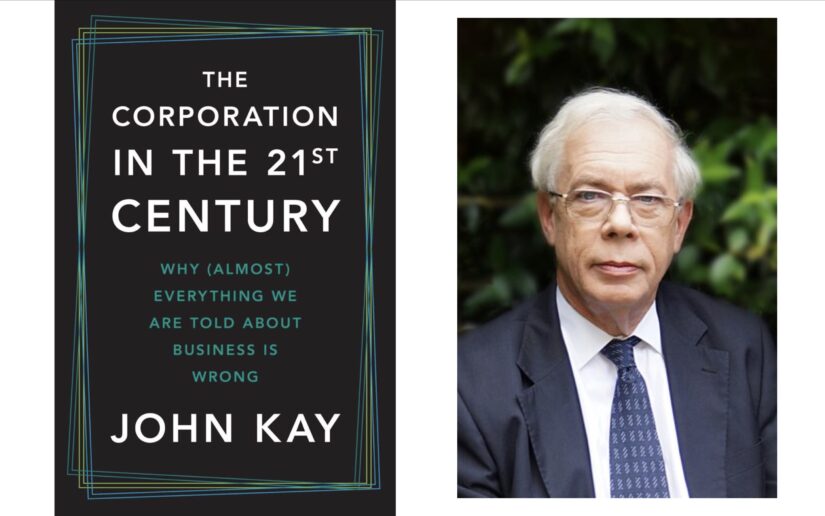
That’s from The Corporation in the Twenty-First Century: Why (Almost) Everything We Are Told About Business Is Wrong, a 2024 book by knighted economist John Kay.

The old industrial meaning of “capital” meant the owned means of production — mills, railways, steel plants, assembly lines. In many modern firms, Kay argues, those assets are fungible, often rented, and less important than the firm’s collective capabilities.

Among his criticisms is how today’s shareholder priority has distracted from the corporation’s origins as a device of the state. Executives can extract value in the short term, but this narrow-mindedness is provably harmful to corporations in the medium term. Business and economics thought has become far too self interested. Its champions treat “collective action” and “collective knowledge” as accidental overflow rather than our truly natural state. The book is thoughtful and important, given that its from among its closest insiders.

Below I have my notes for future reference.

Continue reading The corporation was invented to serve the people
ESHIP “Builder of the Day”

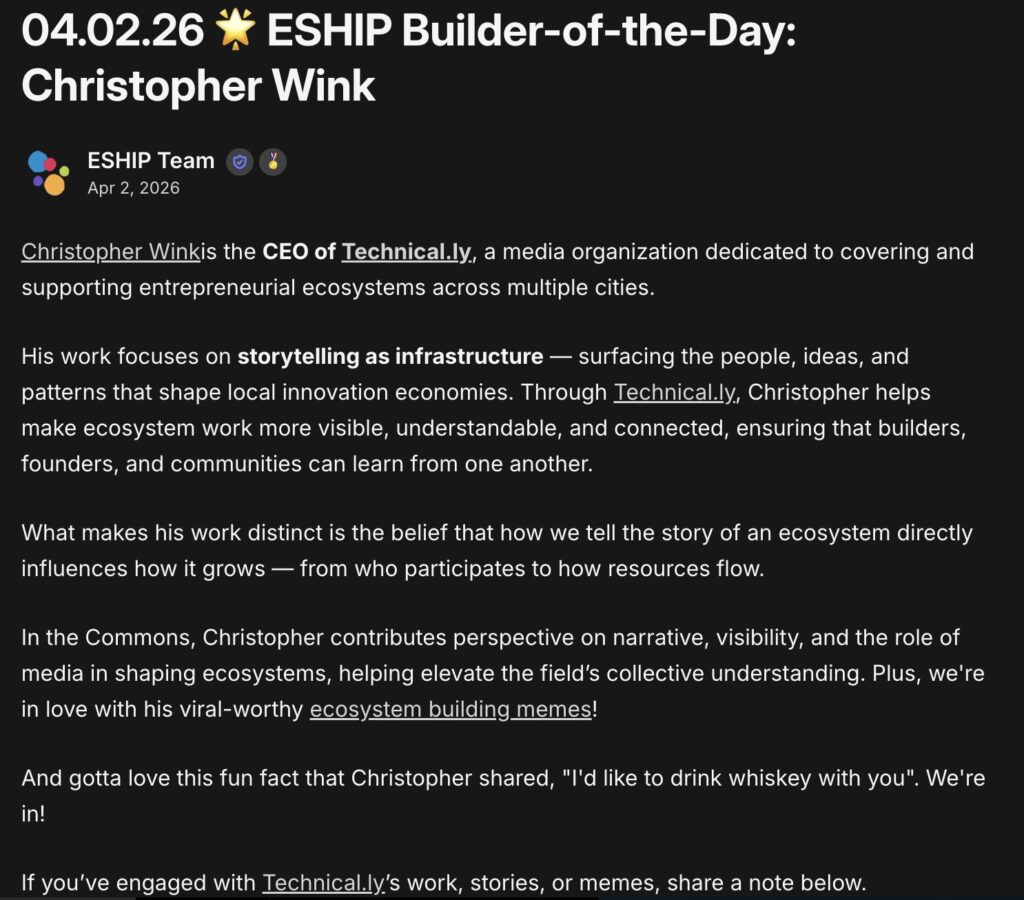
The tribe I feel closest to are the ecosystem builders: those who work their tails off to bring entrepreneurship to the center of local strategy.

One of the chief conveners is ESHIP Alliance, which is growing an online community of just such ecosystem builders. Smartly, and generously, there they’re highlighting longtime and active ecosystem builders. I’m proud they kindly highlighted my Technical.ly work today.

This is a clever strategy 🙂 Thanks to ESHIP leader-organizers and champions

My foundational political belief: countervailing power

This was originally a social video

What’s your defining political belief?

I’ve been thinking about that because on this app, and others, there’s a loud and often vicious argument among people most Americans would place somewhere left of center. Liberal, progressive, leftist, socialist, Democrat — those words do not mean the same thing, and I usually try not to wade into that labeling fight, either as a journalist or as someone who studied political science.

But I do think there’s a fair and useful question underneath it all: what is your foundational belief? Mine is this: I am deeply skeptical of concentrated power.

Continue reading My foundational political belief: countervailing power

One Day, Everyone Will Have Always Been Against This

Long the most compelling evidence of the net good of the project called “Western civilization” has been the demand for so many to join it. No doubt it’s always included misdirection and dastardly ethical lapses but surely all told the demand showed it was worth it. What happens when that changes?

The author who overlooked the petty indignities because of the remarkable and widespread freedom — of movies and walking into a library unencumbered by fear was thrilling. But the paper thin reliance on Israel over the killing of Palestinian children has broken a growing number of adherents.

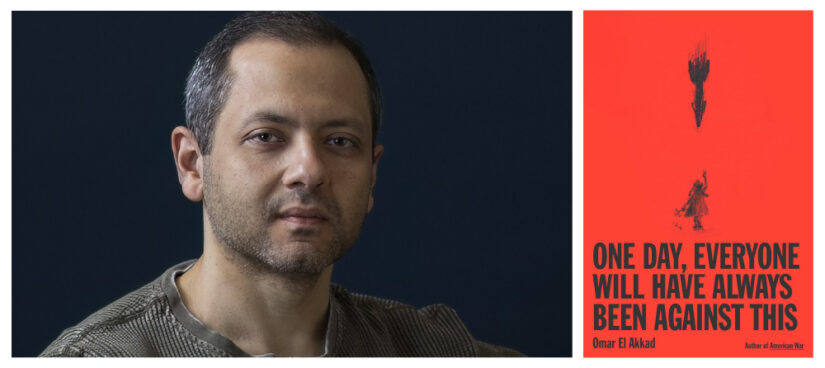
That’s what I kept thinking of while reading One Day, Everyone Will Have Always Been Against This, the February 2025 National Book Award winning lyrical takedown of Western enablement of the Israeli genocide of Palestinians by novelist Omar El Akkad. It is harrowing, and beautiful and imporant.

“This is an account of a fracture, a breaking away from the notion that the polite, western liberal ever stood for anything at all,” he writes, and then later to the western liberal, of which I would likely be considered one: “It’s no use in the end to scream again and again at the cold, cocooned center of power: I need you just this once to be the thing you pretend to be”

Elsewhere: “There’s no such thing as someone else’s children.”

Below I have my notes for future reference.

Continue reading One Day, Everyone Will Have Always Been Against This

The deadliest infectious disease of all time is curable

Tuberculosis (TB) is the deadliest infectious disease in history, having caused more than 1 billion deaths over the past 200 years. It is currently the leading infectious killer globally, recently surpassing COVID-19 to regain this status. TB has plagued humanity for thousands of years.

And yet, it is a preventable and curable disease. Most cases of active TB can be successfully treated and cured with a standard course of antibiotics. Tuberculosis death isn’t really caused by the bacteria anymore but by social determinants of health. Something should be done.

That’s from “Everything Is Tuberculosis: The History and Persistence of Our Deadliest Infection,” a March 2025 book by American author, novelist and Youtuber John Green. It is short, charming, insightful and harrowing. I recommend reading, and joining his cause.

“The real cause of contemporary tuberculosis is, for lack of a better term, us,” he writes. “So we have entered a strange era of human history: a preventable, curable infectious disease remains are deadliest. That’s the world we are currently choosing.”

Below are my notes for future reference.

Continue reading The deadliest infectious disease of all time is curable

To navigate AI, journalists must know the technology, and their job

To navigate AI, journalists need to break it down: What the technology is, and what the job is.

I was thrilled to keynote this weekend’s New Mexico Local News Fund’s local news summit in Albuquerque. My talk: Risks, Ethics and Opportunities for AI in Local Newsrooms.

To an audience of 100 local journalists and publishers in New Mexico, and supporters from around the conutry, I walked through a simplified framework for understanding what we call artificical intelligence — and I shared Technical.ly’s ethics for AI in storytelling.

Find my full slides here.

Enormous credit to Rashad Mahmood and Denise Zubizarreta.

Where the American policy of backing violent insurgents started

The Cold War was a sprawling, decades-long global imperial campaign advancing American-style capitalism. It worked, at least for those who orchestrated it. Anywhere any unaligned effort, and certainly any movement connected toward the Soviet communistic system, faced direct or indirect American military and special forces. 

Little known strategies from Indonesia and Brazil in the 1960s, as poorly known as they are, became models exported worldwide. That’s from The Jakarta Method: Washington’s Anticommunist Crusade and the Mass Murder Program that Shaped Our World, a 2020 book by American journalist Vincent Bevins.

As he writes: “I am not saying that the United States won the Cold War because of mass murder. The Cold War ended mostly because of the internal contradiction of Soviet communism, and the fact that its leaders in Russia accidentally destroyed their own state. I do want to claim that this loose network of extermination programs, organized, and justified by anti-communist principles, was such an important part of the US victory that the violence profoundly shaped the world we live in today.”

Below I share notes from the book for my future reference.

Continue reading Where the American policy of backing violent insurgents started

Yes, I vibe-coded a new landing page

I’ve been blogging for at least 20 years now, which means this site has lots of embarrassing signals of previous versions of myself. That also means whatever particular post I put up doesn’t necessarily present the particular person I think I am.

So I thought it would be helpful to have a simpler landing page online for my work and identity as a journalist and community contributor — one that isn’t owned by some distant publicly-traded corporation. Meanwhile, I was looking for a tiny coding project that I could complete on my own with the current generation of AI tools.

Here it is: I vibe-coded a (very) simple landing page at ChristopherWink.com, migrated my decades-old WordPress blog to a new hosting provider and brought it to a new subdomain.

Continue reading Yes, I vibe-coded a new landing page

Forget the AI boosters and doomers, and focus on the “current harms”

The artificial intelligence debate is often discussed as two sided: the boosters and the doomers.

Those who think AI will bring upon abundance, or those who predict it ushers in catastrophe, and the two debate how necessary “AI safety” needs to be handled. But the “current harms” research movement argues something else: Most of the cheers and fears are predicated on over-enthusiasm that won’t come to pass. Instead, focus on what threats are here now.

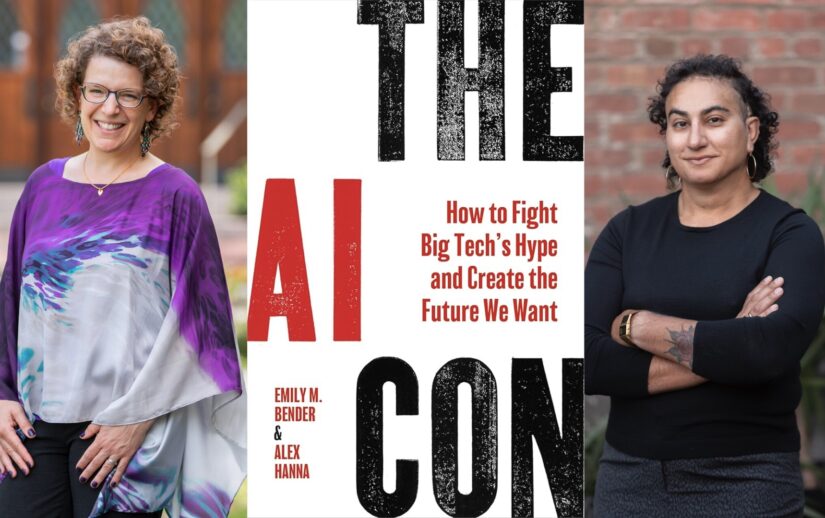
Thats from The AI Con: How to Fight Big Tech’s Hype and Create the Future We Want, the spring 2025 book by researchers Alex Hanna and Emily M. Bender.

In the same way I read futurist Ray Kurzweil’s book as plainly overly optimistic, this reads as overly caustic. As a tech journalist who has spent 20 years being hawked products, I understand, and am sympathetic, to their counterbalance of AI’s hype, but this book has suggests nothing redeeming. Probabalistic language tools used for light therapy are only suicide risks, they say, not an entry point for others. Stitching together many tools into “everything machines” are money-grabs, giving cover to an endless list of state and corporate harms.

I admire them, have followed their work and am closer to them than others in the field — I, too, struggle to believe the most extreme predictions from tech executives who have lied to me many times. Still, their ceaseless pessimism reads to me sometimes as if they’ve shut off everyone who is building in the technology. As they write with similar confidence as those they most criticize: “AI is not going to replace your job. But it will make your job a lot shittier.”

That said, the authors close their book saying they are not anti technology nor even pattern matching algorithms. They write: “We want technology that is created to strengthen and empower communities, not technology that reproduces and enables systems of oppression, consolidation of power and environmental devastation”

Below I share my notes for future reference.

Continue reading Forget the AI boosters and doomers, and focus on the “current harms”