The deadliest infectious disease of all time is curable

Tuberculosis (TB) is the deadliest infectious disease in history, having caused more than 1 billion deaths over the past 200 years. It is currently the leading infectious killer globally, recently surpassing COVID-19 to regain this status. TB has plagued humanity for thousands of years.

And yet, it is a preventable and curable disease. Most cases of active TB can be successfully treated and cured with a standard course of antibiotics. Tuberculosis death isn’t really caused by the bacteria anymore but by social determinants of health. Something should be done.

That’s from “Everything Is Tuberculosis: The History and Persistence of Our Deadliest Infection,” a March 2025 book by American author, novelist and Youtuber John Green. It is short, charming, insightful and harrowing. I recommend reading, and joining his cause.

“The real cause of contemporary tuberculosis is, for lack of a better term, us,” he writes. “So we have entered a strange era of human history: a preventable, curable infectious disease remains are deadliest. That’s the world we are currently choosing.”

Below are my notes for future reference.

Continue reading The deadliest infectious disease of all time is curable

To navigate AI, journalists must know the technology, and their job

To navigate AI, journalists need to break it down: What the technology is, and what the job is.

I was thrilled to keynote this weekend’s New Mexico Local News Fund’s local news summit in Albuquerque. My talk: Risks, Ethics and Opportunities for AI in Local Newsrooms.

To an audience of 100 local journalists and publishers in New Mexico, and supporters from around the conutry, I walked through a simplified framework for understanding what we call artificical intelligence — and I shared Technical.ly’s ethics for AI in storytelling.

Find my full slides here.

Enormous credit to Rashad Mahmood and Denise Zubizarreta.

Where the American policy of backing violent insurgents started

The Cold War was a sprawling, decades-long global imperial campaign advancing American-style capitalism. It worked, at least for those who orchestrated it. Anywhere any unaligned effort, and certainly any movement connected toward the Soviet communistic system, faced direct or indirect American military and special forces. 

Little known strategies from Indonesia and Brazil in the 1960s, as poorly known as they are, became models exported worldwide. That’s from The Jakarta Method: Washington’s Anticommunist Crusade and the Mass Murder Program that Shaped Our World, a 2020 book by American journalist Vincent Bevins.

As he writes: “I am not saying that the United States won the Cold War because of mass murder. The Cold War ended mostly because of the internal contradiction of Soviet communism, and the fact that its leaders in Russia accidentally destroyed their own state. I do want to claim that this loose network of extermination programs, organized, and justified by anti-communist principles, was such an important part of the US victory that the violence profoundly shaped the world we live in today.”

Below I share notes from the book for my future reference.

Continue reading Where the American policy of backing violent insurgents started

Yes, I vibe-coded a new landing page

I’ve been blogging for at least 20 years now, which means this site has lots of embarrassing signals of previous versions of myself. That also means whatever particular post I put up doesn’t necessarily present the particular person I think I am.

So I thought it would be helpful to have a simpler landing page online for my work and identity as a journalist and community contributor — one that isn’t owned by some distant publicly-traded corporation. Meanwhile, I was looking for a tiny coding project that I could complete on my own with the current generation of AI tools.

Here it is: I vibe-coded a (very) simple landing page at ChristopherWink.com, migrated my decades-old WordPress blog to a new hosting provider and brought it to a new subdomain.

Continue reading Yes, I vibe-coded a new landing page

Forget the AI boosters and doomers, and focus on the “current harms”

The artificial intelligence debate is often discussed as two sided: the boosters and the doomers.

Those who think AI will bring upon abundance, or those who predict it ushers in catastrophe, and the two debate how necessary “AI safety” needs to be handled. But the “current harms” research movement argues something else: Most of the cheers and fears are predicated on over-enthusiasm that won’t come to pass. Instead, focus on what threats are here now.

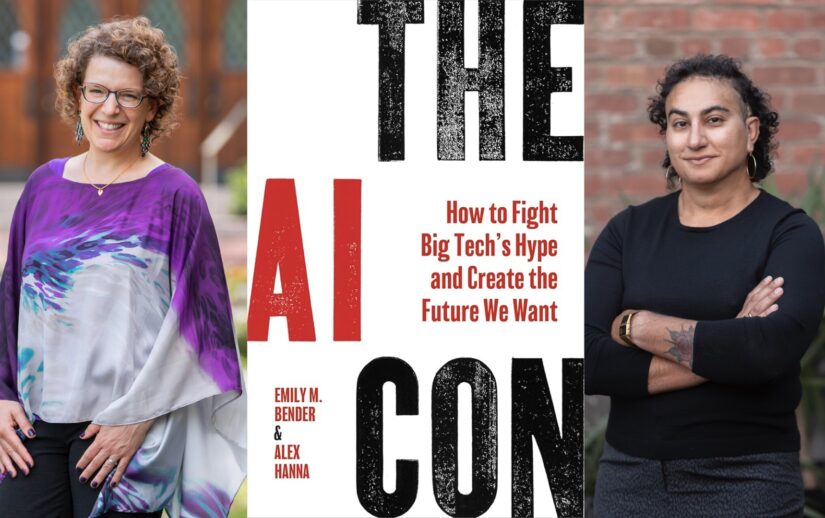
Thats from The AI Con: How to Fight Big Tech’s Hype and Create the Future We Want, the spring 2025 book by researchers Alex Hanna and Emily M. Bender.

In the same way I read futurist Ray Kurzweil’s book as plainly overly optimistic, this reads as overly caustic. As a tech journalist who has spent 20 years being hawked products, I understand, and am sympathetic, to their counterbalance of AI’s hype, but this book has suggests nothing redeeming. Probabalistic language tools used for light therapy are only suicide risks, they say, not an entry point for others. Stitching together many tools into “everything machines” are money-grabs, giving cover to an endless list of state and corporate harms.

I admire them, have followed their work and am closer to them than others in the field — I, too, struggle to believe the most extreme predictions from tech executives who have lied to me many times. Still, their ceaseless pessimism reads to me sometimes as if they’ve shut off everyone who is building in the technology. As they write with similar confidence as those they most criticize: “AI is not going to replace your job. But it will make your job a lot shittier.”

That said, the authors close their book saying they are not anti technology nor even pattern matching algorithms. They write: “We want technology that is created to strengthen and empower communities, not technology that reproduces and enables systems of oppression, consolidation of power and environmental devastation”

Below I share my notes for future reference.

Continue reading Forget the AI boosters and doomers, and focus on the “current harms”

How the internet connects across the world

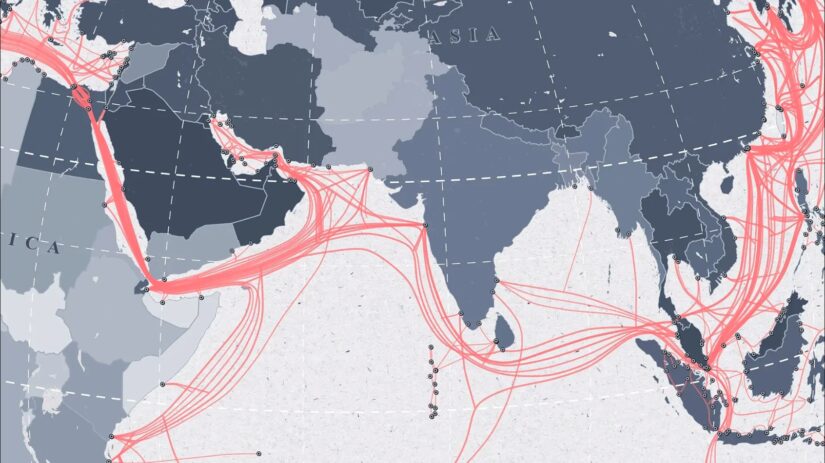
Close to 900k miles of undersea cables criss-cross the world’s oceans. Pulsing light carrying data that makes up every Instagram post, email and transfer speed between users and data centers.

Mostly they’re thin as a garden hose, and the modest landing stations that bring them on-ground are all “air conditioned disappointment.” All this infrastructure is quiet and bulky and difficult, nothing like the frictionless experience we’re treated to online. We ought to better understand it.

That’s from The Web Beneath the Waves: The Fragile Cables That Connect Our World, a trim little fall 2025 book by journalist Samanth Subramanian, which neatly, artfully and helpfully captures core infrastructure of our digital age. It’s a delightful read.

Below I share my notes for future reference.

Continue reading How the internet connects across the world

Mega-events have failed cities before. Are we learning?

Cities love hosting mega-events — the Olympics, World Cup, NFL Draft. But decades of research suggest they rarely deliver the long-term economic boost leaders promise.

Are we learning? This was the focus of the plenary discussion I moderate this week in Washington DC at the annual leadership summit hosted by the International Economic Development Council (IEDC).

I also wrote about it for Technical.ly here.

Continue reading Mega-events have failed cities before. Are we learning?

Mind the difference between what you know, and what you think you know

More of us should familiar with Bayesian probability, in which you acknowledge your priors and update frequently.

In predictions and finance, the average is more often close to the best than to the worst. So figure if you really want to be average. Poker, chess, earthquakes and economics are either so varied or still missing some underlying sense for predictions to be especially good; in contrast to other weather and the emergence of collective wisdom.

All that’s from the 2015 book “The Signal and the Noise: Why So Many Predictions Fail–but Some Don’t,” by pollster, odds-maker and very-online-person Nate Silver. This book was before Trump’s first election, and when Silver began his combative persona online. Back then, poker and gambling was a world of mathematical insights, presaging other books like one in 2018 by Annie Duke. It injected a kind of numeracy among the professional class, which was good, though we’ve been fighting against the numbers ever since.

As Silver, who was 37 when this book came out, wrote then: “This book is less about what we know then about the difference between what we know and what we think we know.”

Below I share my notes for future reference.

Continue reading Mind the difference between what you know, and what you think you know

Lessons on entrepreneurial ecosystem building

The entrepreneur-boosters of Boulder were always adept at packaging their story.

Over my years organizing while reporting on startup communities in the U.S. mid-Atlantic via the news org I founded Technical.ly, I understood a cohort of entrepreneurs and investors told a compelling story for their swath of Colorado. They packaged processes (an ever-evolving accelerator program called Techstars) and developed an outsized stream of software companies, alongside that state’s evolving economy.

Among the messages coming from their work that I personally believe in: “Quantity based approaches operate on the assumption that averages, not outliers, drive system value. That is incorrect.”

A “more of everything approach doesn’t work. Instead, an economy that is more accessible and dynamic requires a complex system of overlapping networks that rewards emergence and expects low probability events that have outsized reruns. The trouble is that economies and local policies are typically run by people motivated by linear progress.

That message is neatly described and navigated in The Startup Community Way, a 2020 revision with researcher Ian Hathaway of a 2012 book initially written by Brad Feld, an investor-organizer most associated with that Boulder, Colorado startup community and Techstars. Feld’s initial book became a common starting place for “entrepreneur ecosystem builders,” and he is a prolific writer and speaker, introducing and crediting himself with concepts, including the phrase “startup communities.”

This edition is the right place to start, and I enjoyed it. Given Colorado’s statewide economic story in the Mountain West, and Feld’s position, this book has particular authority and insight. Keeping with his “give back” mentality, working with many hands, the book includes a dozen or so page-length essays from contributors and longtime collaborators across the United States. Hathaway injects the growing research on the importance of entrepreneurship.

Their success lifts a tide that helps many boats, including places and subjects important to my work. I thank them for it. As per usual, outside my own journalism and organizing, here on my personal blog, below I share my notes for future reference from a book I enjoyed.

Continue reading Lessons on entrepreneurial ecosystem building

Our progress can disappear what we once were

One of the stranger feelings in adult life is realizing that “progress” can narrow a person as much as it elevates him.

A family climbs and suddenly whole kinds of work, whole ways of speaking, even whole categories of suffering start to feel farther away — not because they disappeared, but because success encourages the fantasy that you have outgrown them. That distance can look like refinement or achievement. It can also look like emotional cowardice, class vanity and a failure to say what really happened to you.

That’s an idea I took from Flesh, David Szalay’s 2025 novel that won the prestigious Booker Prize.

I adored this, pored over it and found it beautiful and visually-insightful and memorable. Below I have a few notes I took for future reference.

Continue reading Our progress can disappear what we once were